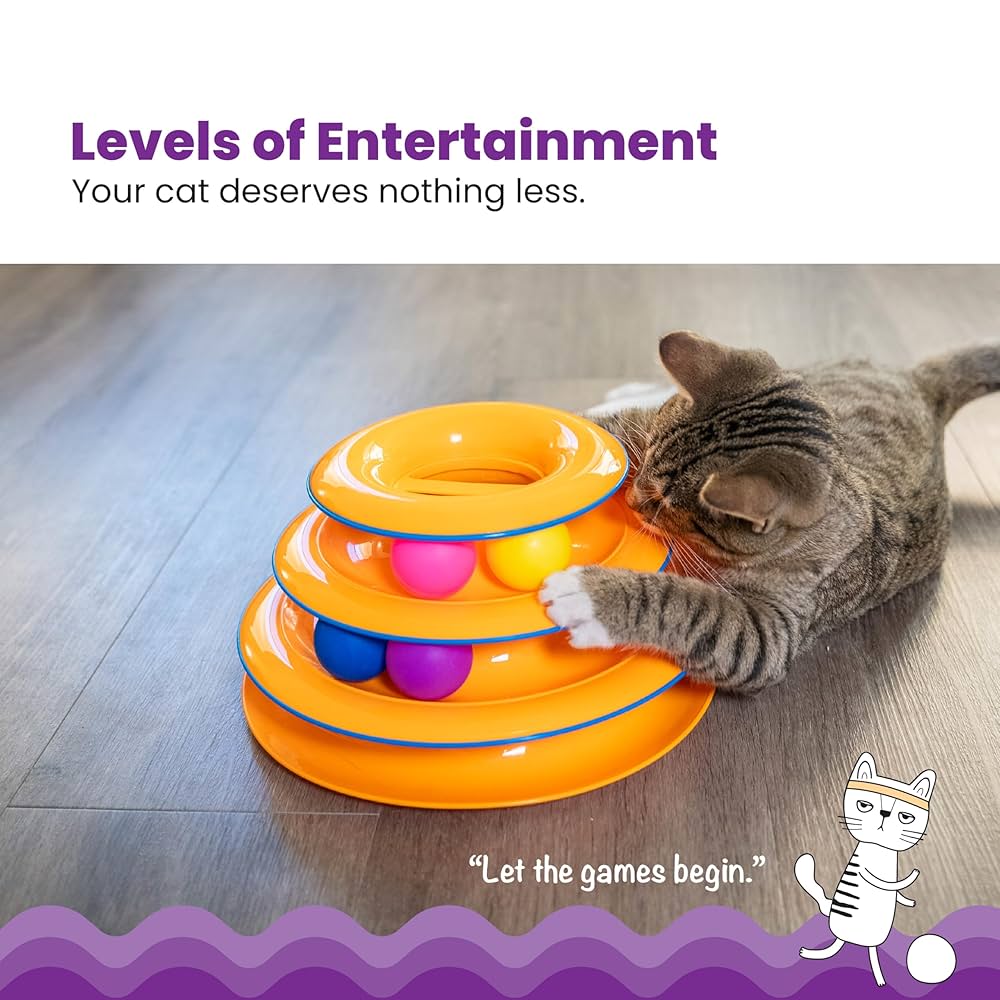
Are you curious about how to say “cat toy” in Spanish? Whether you want to shop for your furry friend while traveling, chat with Spanish-speaking pet lovers, or simply expand your language skills, knowing this simple phrase can make a big difference.
Imagine easily asking for your cat’s favorite plaything without confusion or hesitation. Keep reading, and you’ll discover the exact words you need—and some helpful tips to use them confidently every time.

Credit: www.amazon.com
Cat Toy In Spanish
Understanding how to say “cat toy” in Spanish can be very useful if you love pets or are shopping in a Spanish-speaking country. Knowing the right words helps you communicate better and find exactly what your furry friend needs. Let’s break down the most common translations and see how they vary across different regions.
Common Translations
The most straightforward translation for “cat toy” in Spanish is “juguete para gato.”This phrase literally means “toy for cat” and is widely understood in many Spanish-speaking countries.
Another simple way to say it is “juguete de gato,”which also means “cat toy” but might sound a bit more casual. Both versions work well when talking to pet store staff or fellow cat lovers.
Here’s a quick look at these common translations:
| Spanish Phrase | Literal Translation | Usage |
|---|---|---|
| Juguete para gato | Toy for cat | Most formal and clear |
| Juguete de gato | Cat toy | Casual and widely understood |
Regional Variations
Spanish varies a lot depending on the country, and so does the way people say “cat toy.” In Mexico, you might hear “juguete para gato”most often, while in Spain, people might simply say “juguete de gato.”
In some places, like Argentina or Chile, you could also come across playful or slang terms for toys, especially among pet owners who like to personalize their language. While these aren’t official translations, they add color to everyday conversations.
Have you ever noticed how different your local pet store’s Spanish terms are compared to other countries? Understanding these regional nuances makes your language skills sharper and your pet shopping easier.
Pronunciation Tips
Mastering the pronunciation of “cat toy” in Spanish can boost your confidence and make your conversations more natural. The phrase is “juguete para gato,” and breaking it down will help you say it clearly. Let’s focus on simple tips that make this easier for you.
Breaking Down The Words
Start by splitting the phrase into three parts: juguete, para, and gato. Each word has a clear rhythm and stress pattern.
- Juguete(hoo-geh-teh): The “j” sounds like an English “h.” The emphasis is on the last syllable “te.”
- Para(pah-rah): Both “a” sounds are open and short. The stress is on the first syllable “pa.”
- Gato(gah-toh): The “g” is hard as in “go.” Stress falls on the first syllable “ga.”
Try saying each word slowly, then speed up as you feel more comfortable. Notice how the vowels are pure and don’t glide like in English.
Practice Techniques
Repeating the phrase aloud several times a day helps lock in the pronunciation. Record yourself and compare it to native speakers you find online.
- Use apps or websites with audio examples to hear the subtle differences.
- Practice with a friend or language partner who can give you feedback.
- Focus on mouth movements—Spanish vowels need clear, open sounds.
Have you tried saying “juguete para gato” while watching your cat play? Linking words to real-life moments makes them easier to remember and pronounce.
Quick Learning Strategies
Learning to say “cat toy” in Spanish can be fun and easy. Quick learning strategies can help you grasp the phrase faster. Focus on simple techniques that engage your memory and practice skills. With consistent effort, you’ll be speaking Spanish confidently.
Using Flashcards
Flashcards are a great way to memorize new words. Write “cat toy” on one side and “juguete para gato” on the other. Review them daily to reinforce your memory. Digital flashcard apps can make this process more interactive. You can shuffle cards or play games to test your knowledge.
Engaging With Native Speakers
Talking with native speakers can improve your language skills. Use language exchange platforms to find Spanish speakers. Ask them how they say “cat toy” in their region. This can give you insight into regional variations. Practicing with native speakers boosts your confidence and fluency.

Credit: www.amazon.com
Contextual Usage
Understanding how to use the term “cat toy” in Spanish within different contexts can make your conversations more natural and effective. Contextual usage helps you not only translate words but also grasp how native speakers talk about everyday items like pet toys. This approach improves your communication and deepens your cultural insight.
In Sentences
Using “cat toy” in Spanish sentences often depends on the situation. The most common translation is “juguete para gato”. You might say:
- Compré un juguete para gato nuevo para mi mascota.(I bought a new cat toy for my pet.)
- ¿Dónde está el juguete para gato que le gusta a Luna?(Where is the cat toy that Luna likes?)
Notice how the phrase fits naturally into everyday statements. You can also shorten it to “juguete de gato”in casual talk, but it’s less common.
During Conversations
When chatting with Spanish speakers about pets, mentioning a cat toy can come up in various ways. People might say:
- ¿Quieres ver el juguete para gato que encontré?(Do you want to see the cat toy I found?)
- Mi gato no juega con ese juguete para gato.(My cat doesn’t play with that cat toy.)
Think about how you describe your pet’s favorites. Do you focus on the toy’s color, size, or function? Adding details makes your language richer and more engaging.
Additional Vocabulary
Learning the phrase for “cat toy” in Spanish is just the start. Expanding your pet vocabulary helps you talk about more items and actions. It also makes conversations clearer and more fun. Here, you will find words for other pet items and common pet phrases. These can help you describe your cat’s needs and habits better.
Related Pet Items
- Cat food– comida para gatos
- Cat bed– cama para gatos
- Cat litter– arena para gatos
- Scratching post– rascador
- Collar– collar
- Leash– correa
- Brush– cepillo
Common Pet Phrases
- My cat likes to play– A mi gato le gusta jugar
- Is the cat hungry?– ¿Tiene hambre el gato?
- Where is the litter box?– ¿Dónde está la caja de arena?
- The cat is sleeping– El gato está durmiendo
- Time to feed the cat– Es hora de alimentar al gato
- Does the cat want to go outside?– ¿Quiere salir el gato?

Credit: www.yahoo.com
Frequently Asked Questions
What Is The Spanish Term For Cat Toy?
The Spanish term for cat toy is “juguete para gato. ” It directly translates to a toy designed for cats to play with and enjoy.
How Do You Pronounce Cat Toy In Spanish?
You pronounce “juguete para gato” as hoo-geh-teh pah-rah gah-toh. It’s important to practice for clear communication.
Are There Different Spanish Words For Cat Toy?
Generally, “juguete para gato” is the common phrase. Regional variations might exist but this term is widely understood.
Can I Use “juguete De Gato” Instead?
Yes, “juguete de gato” also means cat toy. It emphasizes possession, meaning a toy that belongs to a cat.
Conclusion
Now you know how to say cat toy in Spanish: “juguete para gato. ” Using this phrase helps you talk about your pet easily. Practice saying it aloud to feel more confident. Try it next time you visit a pet store or chat with Spanish speakers.
Learning small words like this builds your vocabulary step by step. Keep exploring more pet-related words to improve your Spanish. Simple steps lead to better language skills. Enjoy sharing your love for cats in a new language!



Leave a Reply