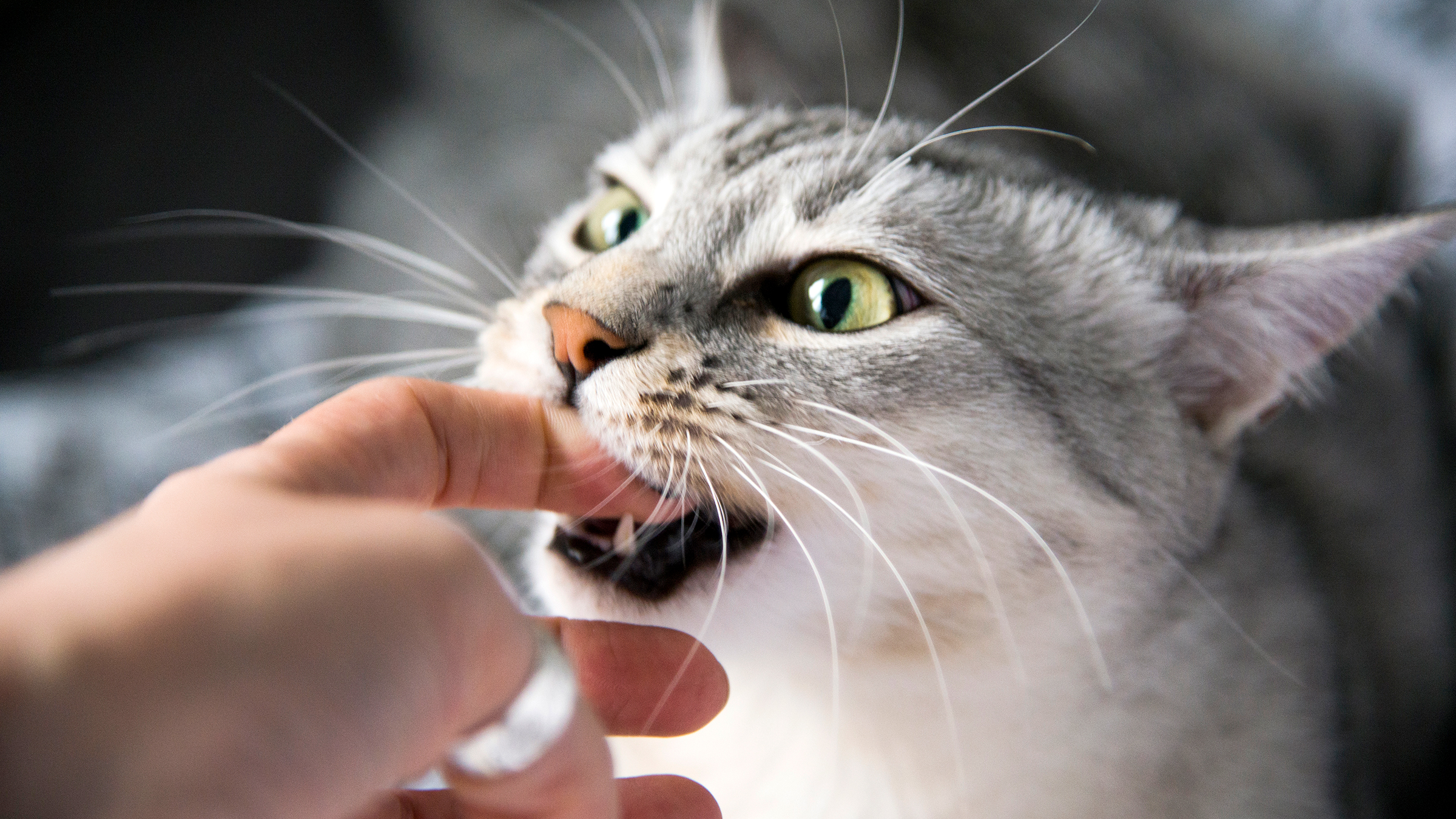
Have you ever reached out to pet your cat, only to have your hand suddenly become their favorite plaything? It can be confusing and even a bit painful when your furry friend treats your hand like a toy.
You might wonder, “Why does my cat think my hand is a toy? ” Understanding this behavior can help you build a stronger bond with your cat and keep your hands safe from surprise bites and scratches. Keep reading to discover the surprising reasons behind this common feline habit and learn simple ways to guide your cat toward better playtime habits.

Credit: uk.news.yahoo.com
Cat Play Behavior
Understanding your cat’s play behavior can help you see why your hand becomes their favorite toy. Cats don’t just play for fun—they’re wired to practice skills they need to survive. This natural behavior often turns your moving fingers into a tempting target.
Instinctive Hunting Drive
Cats have a strong hunting instinct passed down from their wild ancestors. Your hand, especially when it moves quickly, mimics the small, quick movements of prey like mice or birds.
When your cat bites or swats at your hand, they’re responding to this instinct. You might notice your cat’s eyes narrow and ears tilt forward—classic signs they’re in hunting mode.
Pouncing And Chasing
Play involves a lot of pouncing and chasing, which are essential hunting skills. Your hand moving under a blanket or darting across a table invites this kind of response.
Try watching how your cat crouches low and then suddenly jumps at your hand. It’s not just playfulness; it’s a way they sharpen their reflexes and timing.
Play As Practice
Every time your cat attacks your hand, they’re practicing skills like stalking, grabbing, and biting. These actions help build coordination and muscle strength.
Think about how young cats wrestle with their siblings. Your hand becomes a substitute partner in this important practice. Could you redirect this energy to safer toys to protect your fingers?
Credit: www.goodrx.com
Hand Movements And Triggers
Cats are natural hunters. Their eyes catch even the smallest movements. Your hand moving can easily trigger their hunting instincts. This section explains how hand movements and certain triggers make your cat see your hand as a toy.
Fast And Sudden Motions
Cats react quickly to fast, sudden movements. Quick hand gestures mimic the actions of small prey. These sharp motions excite your cat and invite play. Slow, steady movements often do not grab their attention like sudden ones.
Hand As Moving Object
Your hand is a moving object in your cat’s world. Moving things catch their eye immediately. The hand’s shape and movement can resemble a small animal. This makes your cat want to chase, bite, or paw at it. The constant motion keeps their focus locked on your hand.
Attraction To Fingers
Fingers are especially interesting to cats. They look like small, wiggling creatures. Cats may try to catch or bite fingers out of curiosity or playfulness. The tiny movements of fingers can be irresistible to a cat’s natural instincts. This makes fingers a tempting target during playtime.
Lack Of Appropriate Toys
Cats often see hands as toys due to a lack of appropriate toys. If they don’t have enough toys, they may target your hands for play. Cats need stimulation and exercise to stay healthy. Without toys, they look for other ways to satisfy their playful instincts.
Boredom And Seeking Stimulation
Cats get bored easily without enough playthings. Boredom leads them to seek out stimulation. Your hands become an easy target. Cats are curious creatures. They explore the world through touch and play. Without toys, they turn to what’s available. Your moving fingers mimic prey. This triggers their hunting instincts.
Preference For Interactive Play
Cats often prefer interactive play. Toys that move or make noise catch their attention. They enjoy chasing and pouncing. If no such toys are around, your hands become substitutes. Moving fingers can be more engaging than static toys. Cats enjoy the unpredictability of hand movements. This makes them exciting playthings.
Replacing Toys With Hands
Without proper toys, hands replace playthings. Cats need regular play sessions. If toys are absent, they use what’s available. Hands are convenient and always present. They provide interaction that stationary toys can’t offer. This makes them appealing for a bored cat. Regularly providing new toys can redirect this behavior.
Attention-seeking Behavior
When your cat bats at your hand like it’s a toy, it’s often more than just play. This behavior can be a clear sign that your feline friend wants your attention. Understanding these moments can help you respond better and strengthen your bond.
Playing To Get Response
Your cat uses playful swats and pounces to catch your eye. They quickly learn that moving your hand sparks a reaction, whether it’s a laugh or a chase. This interaction becomes a game where your attention is the prize.
Have you noticed your cat intensifies their play when you’re busy? They want to break through your focus and remind you they’re there. Try giving them a few minutes of undivided playtime to satisfy this need.
Bonding Through Play
Playing with your cat is more than fun—it’s a way to connect. When your cat views your hand as a toy, they’re inviting you into their world. This shared activity builds trust and deepens your relationship.
Use toys instead of your hands to keep play safe and enjoyable. Feather wands or laser pointers allow your cat to express their hunting instincts without accidental scratches. This switch also teaches your cat where and how to play appropriately.
Signs Of Affection
Sometimes, your cat’s playful attacks are their way of showing love. Nipping or gentle pawing can be a soft expression of closeness. It’s their unique way of saying, “I like you.”
Pay attention to their body language—relaxed ears, slow blinking, and a purring pounce often accompany these gestures. Recognizing these signs helps you appreciate your cat’s affection, even if it feels a bit rough at times.
Kitten Vs Adult Cat Differences
Understanding why your cat sees your hand as a toy often depends on whether you’re dealing with a playful kitten or a more mature cat. Their behavior and reactions vary greatly with age, and recognizing these differences can help you adjust your interactions. Let’s break down how kittens and adult cats differ in their play styles and what this means for your hand’s safety.
Higher Playfulness In Kittens
Kittens are naturally curious and have boundless energy. They use play to explore their environment and practice hunting skills, often targeting moving objects—including your hands.
Your hand moving quickly mimics prey, triggering their instinct to chase and pounce. This behavior is a critical part of their development, so patience is key as they learn boundaries.
Mature Cats’ Play Habits
Adult cats usually play less aggressively and more selectively. They tend to prefer toys over hands because they’ve learned what’s appropriate to bite and scratch.
If your adult cat still attacks your hand, it might be a sign of boredom or insufficient mental stimulation. Providing interactive toys or puzzle feeders can redirect this behavior effectively.
Training And Socialization Effects
How your cat was socialized impacts their play habits. Kittens handled gently and taught early that hands aren’t toys grow into calmer adults.
Without this training, even adult cats might continue playful biting. Consistent redirection and positive reinforcement can teach your cat to play nicely without using your hands.

Credit: www.youtube.com
How To Redirect The Behavior
Redirecting your cat’s playful nibbles and pounces away from your hand is key to keeping both of you safe and happy. Cats often mistake hands for toys because of movement and the fun of chasing. Helping your cat focus on appropriate objects can ease this behavior and build better play habits.
Using Appropriate Toys
Give your cat toys that mimic the movement and size of prey. Wand toys, balls, and small stuffed mice work well to channel their hunting instincts.
Try rotating toys to keep your cat interested. If the same toy is always available, they might lose interest and go back to your hand.
I found that using a feather wand during playtime distracted my cat completely from my fingers. What toys does your cat seem to prefer?
Setting Play Boundaries
Be consistent about what is okay to bite or scratch. If your cat goes for your hand, immediately stop the play session.
Use a gentle but firm “no” or a hiss to signal that hands are off-limits. Then redirect their attention to a toy.
Setting these boundaries early helps your cat learn limits. Have you noticed if your cat tests boundaries more when they’re tired or overstimulated?
Positive Reinforcement
Reward your cat when they play gently or choose their toys over your hands. Use treats or affection to reinforce good behavior.
Praise your cat immediately after they switch focus to their toy. Timing is important for them to connect the reward with the action.
Positive reinforcement builds trust and encourages your cat to repeat good habits. What rewards motivate your cat the most?
When To Be Concerned
Understanding when your cat’s playful biting turns into a concern is important. Cats often see hands as toys during playtime, but this behavior can sometimes escalate. Knowing the warning signs helps keep both you and your cat safe.
Aggressive Biting Signs
- Sudden hard bites that break the skin
- Repeated biting without stopping
- Hissing, growling, or flattened ears before biting
- Swatting with claws out during the bite
- Stiff body posture or rapid tail movement
Avoiding Injury
Use toys to redirect your cat’s biting. Avoid using your hands as play objects. Keep nails trimmed to reduce scratches. Stop play immediately if biting becomes too hard. Wear protective gloves if needed during play.
Consulting A Vet Or Behaviorist
Seek professional help if biting worsens or causes injury. A vet can check for pain or health issues. A behaviorist can provide training tips and behavior modification. Early advice prevents long-term problems. Professional guidance helps you and your cat live peacefully.
Frequently Asked Questions
Why Does My Cat Bite My Hand Like A Toy?
Cats often mistake hands for toys due to playful instincts. Moving hands trigger their hunting behavior. They see your hand as something to chase and pounce on, especially during playtime or if their toys are unavailable.
How Can I Stop My Cat From Biting My Hand?
Redirect their biting to appropriate toys. Use interactive toys to engage them. Avoid using hands for play to prevent confusion. Reward gentle play with treats and praise to encourage positive behavior.
Is My Cat’s Hand Biting Aggressive Or Playful?
Hand biting is usually playful, not aggressive. Cats use biting to explore and interact. However, if biting is hard and accompanied by hissing, it could signal stress or irritation.
Does Hand Biting Mean My Cat Is Bored?
Yes, boredom can cause hand biting. Cats need mental and physical stimulation. Regular play sessions and new toys help reduce boredom and prevent unwanted biting behavior.
Conclusion
Cats see your hand as a fun toy because of their natural play instincts. They love to chase, pounce, and bite moving objects. Your hand moves like prey, which excites their hunting skills. Play helps cats stay active and happy.
It also builds a strong bond between you and your pet. Try using real toys to keep your hands safe. Remember, patience and gentle training can teach your cat good habits. Enjoy the fun times, but also keep your hands protected.
Your cat’s playful nature is a sign of trust and love.


Leave a Reply