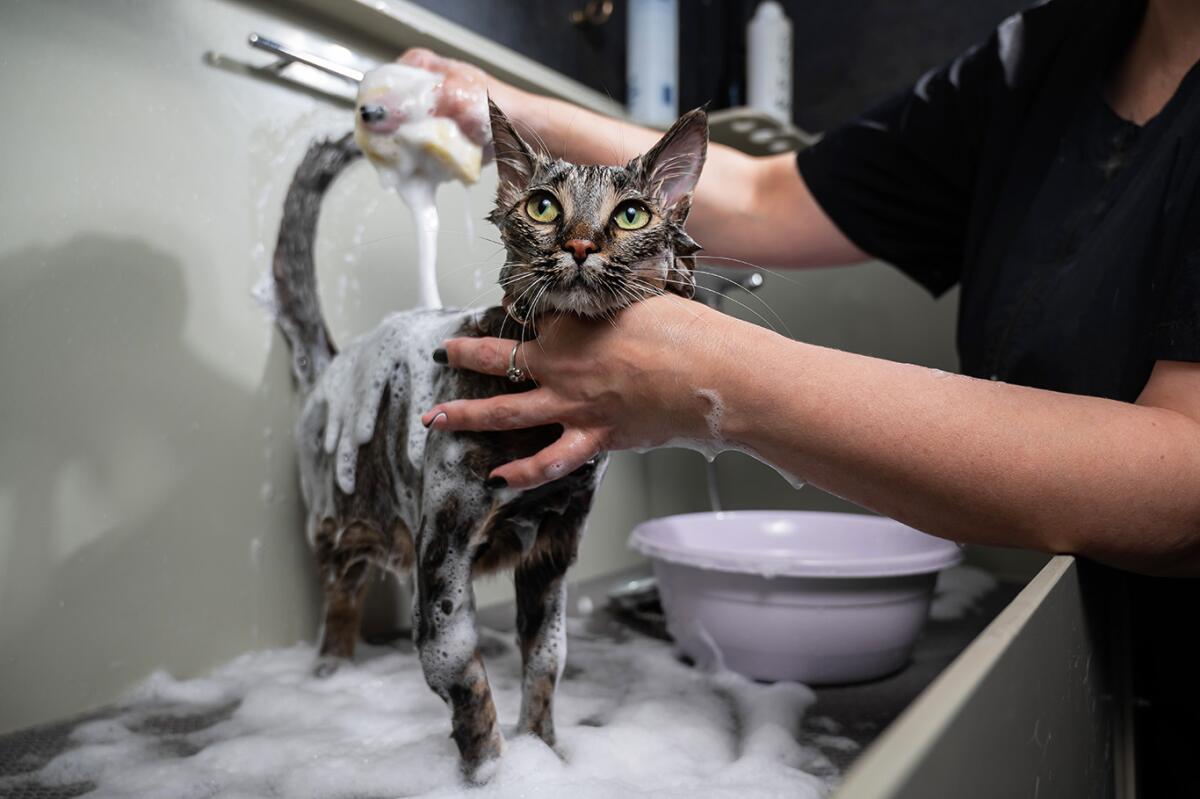
Have you ever wondered how a professional groomer manages to wash a cat without turning it into a scratching whirlwind? If you’ve tried giving your feline friend a bath, you know it’s not an easy task.
But there’s a special way groomers do it that keeps cats calm and clean. You’ll discover the simple yet effective steps groomers use to wash cats safely and comfortably. By understanding these techniques, you’ll feel more confident the next time your furry companion needs a bath.
Keep reading to unlock the secrets behind a stress-free cat wash!

Credit: www.latimes.com
Preparing For The Bath
Preparing a cat for a bath needs care and patience. Cats often dislike water, so getting ready helps make the process smooth. The right preparation calms the cat and sets up a safe bath time. Groomers follow specific steps to ensure everything is ready before wetting the cat.
Gathering Supplies
Collect all necessary items before starting the bath. This includes cat-friendly shampoo, a cup for rinsing, towels, and a brush. Having everything close avoids leaving the cat alone. Prepare a non-slip mat for the sink or tub to keep the cat steady. A small spray nozzle or gentle cup helps control water flow. Warm water is best; it should feel comfortable to touch.
Choosing The Right Location
Select a quiet, warm place for the bath. Avoid noisy rooms or areas with drafts. A bathroom or laundry sink often works well. Keep doors closed to prevent escape. Ensure the surface is secure and non-slippery. Good lighting helps see the cat’s coat clearly. A calm setting lowers the cat’s stress during washing.
Brushing Before Bath
Brush the cat’s fur gently before the bath. This removes loose hair and tangles. Brushing helps prevent mats from tightening when wet. Use a soft brush suited for the cat’s coat type. Take time to calm the cat during brushing. This step also reveals any skin issues to watch for during the bath.

Credit: www.latimes.com
Calming The Cat
Calming the cat is a crucial step before washing. Cats often feel scared or stressed during grooming. A calm cat is easier to handle and safer to wash. Groomers use gentle techniques to ease the cat’s anxiety. This creates a better experience for both the cat and the groomer.
Using Gentle Handling
Groomers hold the cat softly but firmly. Sudden moves can scare the cat. They stroke the cat in slow, smooth motions. This builds trust and lowers stress. Supporting the cat’s body well keeps it comfortable. Gentle handling prevents the cat from trying to escape or scratch.
Creating A Quiet Environment
Noise can make cats nervous. Groomers keep the washing area calm and quiet. They avoid loud sounds and sudden noises. Soft lighting helps the cat feel safe. A peaceful space reduces the cat’s fear. This calm setting allows the cat to relax more easily.
Using Treats And Rewards
Treats help the cat stay calm and cooperative. Groomers offer small, tasty snacks before and after washing. This makes the cat feel happy and rewarded. Positive reinforcement encourages the cat to stay still. Rewards turn the washing experience into a positive one.
Bathing Techniques
Bathing a cat can be a delicate task that requires patience and the right technique. Groomers use specific methods to ensure the experience is as calm and effective as possible. Understanding these bathing techniques can help you manage your cat’s bath time with less stress and better results.
Water Temperature Tips
The water temperature is crucial when washing a cat. Too hot or too cold water can make your cat uncomfortable and anxious.
Use lukewarm water—around body temperature, about 37°C (98.6°F). Test the water on your wrist before starting to ensure it feels warm but not hot.
Keeping water at the right temperature helps your cat relax and prevents sudden movements that could lead to scratches or escapes.
Applying Cat-friendly Shampoo
Not all shampoos are safe for cats. Using a cat-specific shampoo avoids skin irritation and allergic reactions.
Apply the shampoo gently, starting from the neck and working down to the tail. Avoid the face and ears to protect sensitive areas.
Work the shampoo into a light lather using slow, calming strokes. This helps your cat feel more comfortable and less threatened.
Washing Without Stress
Keeping your cat calm during a bath is a challenge but essential. Speak softly and move slowly to avoid startling your cat.
Use a handheld sprayer or a cup to rinse gently. Avoid spraying directly on the face or ears.
Placing a rubber mat in the sink or tub gives your cat better footing and reduces slipping, which can cause panic.
Have you noticed how your cat’s reaction changes with different handling approaches? Paying attention to these subtle cues can make bath time easier for both of you.
Drying The Cat
Drying a cat after a bath is a crucial step in grooming. Wet fur can make cats cold and uncomfortable. Proper drying helps prevent skin problems and keeps the cat calm. Groomers use gentle methods to dry cats without causing stress. Each cat reacts differently, so patience is important.
Towel Drying Methods
Groomers start by wrapping the cat in a soft towel. They use gentle pressing motions instead of rubbing. Rubbing can tangle the fur and hurt the cat’s skin. Absorbing water carefully helps remove most moisture. Sometimes, groomers use multiple towels to keep the cat dry. This step reduces the time needed for other drying tools.
Using A Hairdryer Safely
Hairdryers are used with low heat and low speed. High heat can burn or scare the cat. Groomers keep the dryer moving to avoid hot spots. They hold it at a safe distance from the fur. Many cats dislike the noise, so quiet models are preferred. Watching the cat’s reaction helps decide when to stop.
Keeping The Cat Warm
Warmth is vital after drying to avoid chills. Groomers place cats in a cozy, draft-free area. Sometimes, heated pads or blankets are used carefully. Keeping the cat calm and relaxed supports faster drying. Warmth also helps the fur dry evenly and stay fluffy.
Post-bath Care
Post-bath care is an important part of grooming a cat. It helps keep the cat comfortable and healthy after washing. The cat’s fur and skin need gentle attention to avoid problems and stress. This care also builds trust between you and your pet.
Brushing After Bath
Brushing the cat after a bath removes loose fur and tangles. Use a soft brush made for cats. Brush gently to avoid hurting the skin. Brushing helps the fur dry faster and stay shiny. It also stops mats and knots from forming.
Checking For Skin Issues
Look closely at the cat’s skin after the bath. Check for redness, bumps, or dry patches. These signs may mean irritation or allergies. If you see problems, consult a vet soon. Early care prevents skin infections and discomfort.
Rewarding Your Cat
Reward your cat after the bath with treats or gentle petting. This makes the experience positive and less scary. Praise helps the cat feel safe and calm. Rewarding encourages good behavior during future baths.
Common Challenges
Cats often resist water, making washing a challenge for groomers. Their sharp claws and nervous behavior require careful handling and patience. Keeping the cat calm is key to a smooth grooming session.
Common Challenges Washing a cat can be a daunting task, especially when facing unexpected hurdles. Many pet owners find themselves tangled in a web of fur and water, unsure of how to manage their feline friend. Understanding these common challenges can help you approach the task with greater confidence and less stress.Dealing With Fear And Anxiety
Cats are creatures of habit, and a bath is far from their daily routine. The sound of running water and the unfamiliar sensation of being wet can trigger fear and anxiety. To ease your cat’s nerves, try to create a calm environment. Speak in soothing tones and use a gentle touch. Consider introducing your cat to water gradually, allowing them to get used to the sensation before a full bath.Handling Scratches And Bites
Even the most docile cat can become defensive during a bath. Sharp claws and teeth are their natural defense mechanisms. To minimize the risk of scratches and bites, trim your cat’s nails beforehand. Wearing long sleeves and using a cat-specific bathing harness can also offer extra protection. Remember, your calm demeanor can often influence your cat’s behavior.When To Seek Professional Help
Sometimes, the challenges of washing a cat are too great to handle alone. If your cat becomes overly aggressive or stressed, it might be time to consider a professional groomer. Professional groomers have the tools and experience to manage even the most difficult cats safely. Ask yourself, is the stress of a home bath worth it for both you and your pet? Seeking professional help can ensure a clean cat without the drama.
Credit: www.angiesmobilepetstyling.com
Frequently Asked Questions
How Does A Groomer Prepare A Cat For Washing?
A groomer gently brushes the cat to remove tangles and loose fur. They check for skin issues and calm the cat. This preparation ensures a smooth and stress-free washing process.
What Shampoo Do Groomers Use For Cats?
Groomers use pet-safe, hypoallergenic shampoos designed specifically for cats. These shampoos are gentle on sensitive skin and maintain the cat’s natural oils, keeping their coat clean and healthy.
How Do Groomers Keep Cats Calm During Washing?
Groomers use slow movements, soothing tones, and gentle handling. They may use warm water and familiar scents to comfort the cat. This approach reduces stress and makes the wash easier.
What Steps Are Involved In Washing A Cat Professionally?
The groomer wets the cat with warm water, applies shampoo, and lathers carefully. They rinse thoroughly to avoid residue, then gently towel dry. Finally, they may use a low-heat dryer for comfort.
Conclusion
Washing a cat takes care and patience. Groomers use gentle water and special shampoo. They keep the cat calm and safe during the bath. Rinsing well removes all soap to avoid skin problems. Drying the fur carefully helps prevent chills.
A clean cat feels fresh and healthy. Knowing these steps can help you understand grooming better. It shows how much care goes into washing a cat. A calm bath makes the whole process easier for the cat.


Leave a Reply