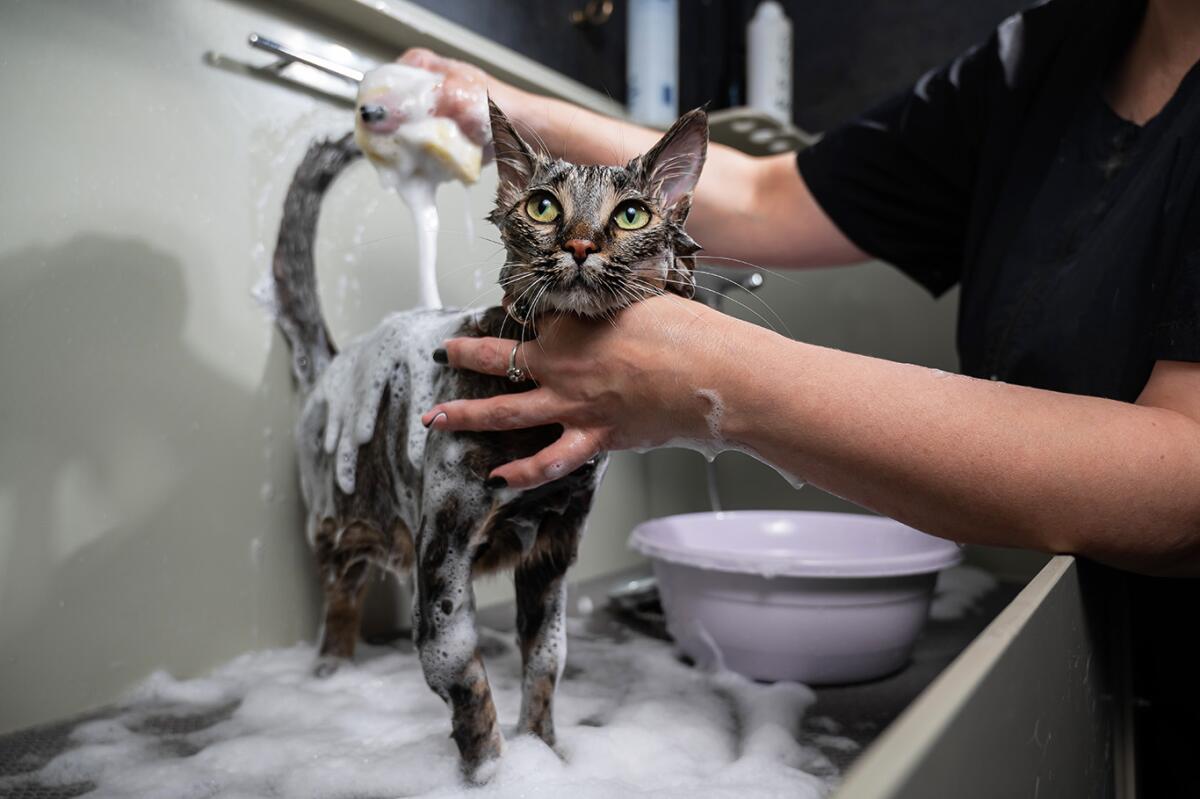
Are you struggling to find the right vet groomer who gives baths to cats? Bathing a cat can be tricky, and not every groomer is comfortable or experienced with it.
You want someone who knows how to handle your furry friend gently and safely. You’ll discover exactly what to look for in a vet groomer who offers cat baths, so your pet stays clean, calm, and happy. Keep reading to find the best tips and expert advice that will make this task easier for both you and your cat.

Credit: www.purina.com
Cat Bathing Challenges
Bathing a cat is often more challenging than it seems. Unlike dogs, most cats dislike water and struggle to stay calm during a bath. This can make the process stressful for both you and your feline friend.
Understanding the challenges can help you decide whether to take on the task yourself or seek professional grooming services. Have you ever tried bathing a cat only to end up drenched and scratched? You’re not alone.
Common Cat Bathing Issues
- Fear and Anxiety:Cats often associate water with discomfort, leading to panic or aggression during baths.
- Scratching and Biting:To escape, cats may use their claws and teeth, which can cause injuries.
- Physical Restraint Difficulties:Holding a slippery, struggling cat safely is tough and can increase stress for both.
- Water Temperature Sensitivity:Cats are sensitive to water temperature; too cold or too hot can cause distress.
- Drying Challenges:Many cats dislike the noise and feel of hair dryers, making drying a struggle.
These issues can quickly turn a simple bath into a chaotic event. Knowing these obstacles makes it clear why many cat owners hesitate before attempting a home bath.
Why Professional Help Matters
Professional vet groomers specialize in handling cats during baths. They use techniques and equipment designed to reduce stress and keep cats safe.
Experts understand feline behavior and can calm anxious cats effectively. Their experience reduces the risk of injury to both the cat and the owner.
Moreover, vet groomers use the right products suited for your cat’s skin and coat, avoiding irritation or allergic reactions. Have you considered how a stress-free grooming experience can improve your cat’s health and happiness?
Credit: www.420spotshop.com
Role Of Vet Groomers
The role of vet groomers extends beyond simply washing and drying cats. These professionals are equipped with specialized skills that ensure your feline friend is not only clean but also healthy and relaxed. Ever wondered why taking your cat to a vet groomer can make a significant difference?
Specialized Cat Care Skills
Vet groomers are trained to handle cats with care and precision. They understand feline behavior and use techniques to keep your pet calm during grooming sessions. This is particularly important for cats who might be anxious or have had negative grooming experiences in the past.
Vet groomers also have the expertise to spot signs of health issues. Early detection of problems like skin infections or unusual lumps can be lifesaving. Wouldn’t you want a groomer who can notice these subtle signs before they become serious?
Health Benefits Of Grooming
Regular grooming by a vet groomer can prevent a host of health issues. For example, matted fur can lead to skin irritation or infections. Grooming helps in removing loose fur, reducing the chances of hairballs, which can cause digestive problems.
Moreover, regular baths and grooming can improve your cat’s skin health and coat shine. It’s not just about aesthetics; a well-groomed cat is a healthier cat. Isn’t it amazing how a simple grooming session can enhance your cat’s overall well-being?
Finding Trusted Groomers
Finding a trusted groomer for your cat is important for its health and comfort. Cats need gentle care during baths to avoid stress. Not all groomers have the right skills or knowledge to handle cats properly. Choosing a groomer with proper training ensures your cat is safe and well cared for.
Certifications To Look For
Certified groomers have proven their skills through exams and training. Look for certifications from recognized organizations like:
- National Cat Groomers Institute of America (NCGIA)
- International Professional Groomers Inc. (IPG)
- American Professional Pet Groomers Association (APPGA)
These certifications show the groomer knows how to handle cats safely. They also indicate knowledge of cat anatomy and behavior. Certified groomers follow hygiene and safety standards during baths.
Recommended Grooming Facilities
Choose grooming facilities with good reviews and clean environments. Facilities that specialize in cats often provide better care. Look for places that:
- Have separate cat grooming rooms
- Use cat-friendly shampoos and tools
- Employ staff trained in feline behavior
- Maintain a calm and quiet atmosphere
Visit the facility before booking. Check how the staff interacts with cats. A trusted groomer makes your cat feel safe and comfortable during baths.

Credit: www.youtube.com
Bathing Techniques For Cats
Bathing cats requires more than just water and soap. It’s about understanding their unique needs and handling them with care. Proper techniques ensure your feline feels safe and stays clean without stress.
Safe Products And Tools
Choose shampoos specifically made for cats. Human or dog shampoos can irritate their skin or cause allergic reactions.
Look for products free from harsh chemicals, fragrances, and dyes. Natural or hypoallergenic options work best.
Invest in a gentle spray nozzle or a small cup for rinsing. Avoid high-pressure water streams that can scare your cat.
A non-slip mat in the sink or tub prevents slipping, making your cat feel more secure.
Stress-free Bathing Methods
Start by brushing your cat thoroughly to remove loose fur and mats. This reduces shedding during the bath.
Use lukewarm water; cold or hot water can shock your cat and cause discomfort.
Talk softly and move slowly to keep your cat calm. Sudden movements or loud noises can increase anxiety.
Limit the bath time to just a few minutes. Prolonged baths can stress your cat unnecessarily.
Have treats ready to reward your cat after the bath. Positive reinforcement helps build trust for future baths.
Have you noticed how your cat reacts when water touches their fur? Understanding their behavior can help you adjust your approach and make bath time easier for both of you.
When To Schedule Baths
Knowing when to schedule a bath for your cat can make a big difference in their comfort and health. Cats generally groom themselves, but there are times when a bath is necessary. Understanding the right timing helps avoid stressing your pet and keeps their coat clean and healthy.
Signs Your Cat Needs A Bath
Look for visible dirt or grease on your cat’s fur that they can’t clean on their own. If your cat has a strong odor or sticky patches, it’s time for a bath. Sometimes, cats with long hair develop mats or tangles that need washing and gentle detangling.
Notice if your cat is scratching more than usual or has dandruff; these signs can mean their skin needs extra care. Cats with certain skin conditions or allergies may require medicated baths as recommended by your vet. If your cat has been exposed to something toxic or sticky, like oil or paint, a bath becomes urgent.
Frequency Based On Cat Type
Short-haired cats usually need fewer baths, often once every few months, unless they get particularly dirty. Long-haired cats benefit from more frequent baths, sometimes monthly, to prevent matting and reduce shedding. Senior or overweight cats might struggle to groom themselves properly and may need baths more often.
Outdoor cats face more dirt and parasites, so they generally require more frequent baths than indoor-only cats. If your cat has a medical condition, your vet might suggest a specific bathing schedule. How often you bathe your cat should balance cleanliness with avoiding skin dryness or irritation.
Additional Grooming Services
Vet groomers do more than just give baths to cats. They offer several other grooming services that keep cats healthy and comfortable. These services address common cat care needs that owners might find hard to do at home. Proper grooming helps prevent health problems and improves a cat’s well-being.
Nail Trimming And Ear Cleaning
Nail trimming is essential to prevent overgrown claws. Long nails can cause pain and damage to furniture or skin. Vet groomers carefully trim nails to avoid hurting the quick. This quick is the sensitive part inside the nail.
Ear cleaning removes dirt and wax buildup. Dirty ears can lead to infections or discomfort. Groomers use gentle tools and solutions made for cats. They ensure the ears are clean without causing stress or pain.
Coat Brushing And Mat Removal
Brushing a cat’s coat removes loose fur and reduces shedding. It also stimulates blood flow and spreads natural oils. This keeps the fur shiny and healthy. Vet groomers use special brushes suited for different fur types.
Mats can form in thick or long fur. They cause discomfort and skin problems if not removed. Groomers carefully cut or brush out mats without hurting the cat. This makes the coat soft and smooth again.
Tips For Cat Owners
Bathing your cat at a vet groomer can be a smooth experience if you know how to prepare and care for your feline friend properly. Cats are often sensitive to water and handling, so understanding what to do before and after the bath helps reduce stress and keeps their coat healthy.
Preparing Your Cat For Grooming
Start by getting your cat comfortable with being touched and handled. Gently stroke their fur and paws daily to build trust and reduce anxiety during grooming sessions.
Choose a quiet time when your cat is calm, such as after a nap. This lowers resistance and makes the process easier for both of you.
Before the bath, brush your cat’s coat thoroughly to remove loose fur and mats. This step prevents tangles from worsening when wet and helps the groomer work more efficiently.
Ask yourself: How does your cat usually react to new experiences? Tailoring your approach to their personality can make a big difference.
Post-bath Care At Home
After the bath, dry your cat gently but thoroughly using a soft towel. Avoid using a hairdryer unless your cat is comfortable with the noise and warmth.
Keep your cat in a warm, draft-free area until completely dry to prevent chills. This simple step supports their overall well-being post-grooming.
Offer treats and affection to reward your cat’s cooperation. Positive reinforcement helps them associate grooming with good experiences.
Monitor your cat’s skin and coat for any signs of irritation or dryness. If you notice anything unusual, contact your vet for advice promptly.
Frequently Asked Questions
What Vet Groomers Offer Cat Bathing Services?
Many professional vet groomers provide cat bathing. They use gentle, cat-safe shampoos and handle cats carefully to reduce stress.
How Often Should Cats Be Bathed By Groomers?
Cats generally need baths every 4-6 weeks if groomed professionally. Frequency depends on breed, health, and lifestyle.
Are Vet Groomers Trained To Handle Stressed Cats?
Yes, vet groomers are trained to calm and safely manage stressed or anxious cats during baths.
What Products Do Vet Groomers Use For Cat Baths?
Vet groomers use hypoallergenic, veterinary-approved shampoos and conditioners. These products ensure safety and maintain cat’s skin health.
Conclusion
Choosing the right vet groomer for cat baths helps keep your pet clean and healthy. Trained professionals understand how to handle cats gently and safely. They use special shampoos that protect your cat’s skin and fur. Regular baths can prevent skin problems and reduce shedding.
Trusting experienced groomers ensures a calm and stress-free experience for your cat. Remember, your cat’s comfort and care come first. A good vet groomer makes all the difference in keeping your furry friend happy.

Leave a Reply