
Have you ever wondered if your Toy Poodle can get along with your cat? You’re not alone.
Many pet owners ask this question because they want a peaceful home where their furry friends can live happily together. Understanding how Toy Poodles feel about cats can save you from unexpected challenges and help you create a loving environment for both pets.
Keep reading to discover what really goes on between these two popular companions—and find out how you can help them become the best of friends.
Toy Poodle Temperament
Toy Poodles are known for their charming personalities, which can greatly influence how they interact with other pets, including cats. Understanding the temperament of a Toy Poodle helps you predict their behavior and ensures a harmonious home environment. Let’s look deeper into the key traits that shape their nature and how these traits might affect their relationship with feline friends.
Social Nature
Toy Poodles are naturally social animals. They often enjoy being around people and other pets, which can make them more accepting of cats in the household.
However, their social behavior depends on early exposure and training. If your Toy Poodle grows up around cats, they’re more likely to be friendly and calm around them.
Energy Levels
These dogs have moderate to high energy levels, meaning they love to play and stay active. This energy can sometimes lead to playful chasing, which might overwhelm a cat.
Balancing playtime and calm moments helps prevent misunderstandings between your Toy Poodle and cat. Have you noticed how your poodle’s energy changes when a cat is nearby?
Adaptability
Toy Poodles are highly adaptable, adjusting well to different living situations and companions. This makes it easier for them to live peacefully with cats, especially when introductions are done gradually.
Patience and consistency are key—allow your poodle and cat to get used to each other’s scents before direct meetings. Have you tried slow introductions to see how your pets react?

Credit: www.adoptapet.com
Cats And Dogs Interaction
Understanding how cats and toy poodles interact can help you create a peaceful home. Their behavior together depends on many factors, like their personalities and early social experiences. Observing their interactions can reveal whether they are likely to become friends or need some boundaries.
Common Behavior Patterns
Cats often show curiosity by cautiously approaching toy poodles. They may flick their tails or arch their backs to express interest or caution. Toy poodles, on the other hand, usually display excitement with wagging tails and playful gestures.
You might notice your toy poodle chasing the cat, but this doesn’t always mean aggression. Sometimes, it’s just their way of inviting play. Pay attention to the cat’s response—whether they run away, freeze, or swipe—to understand the dynamic better.
Signs Of Friendship
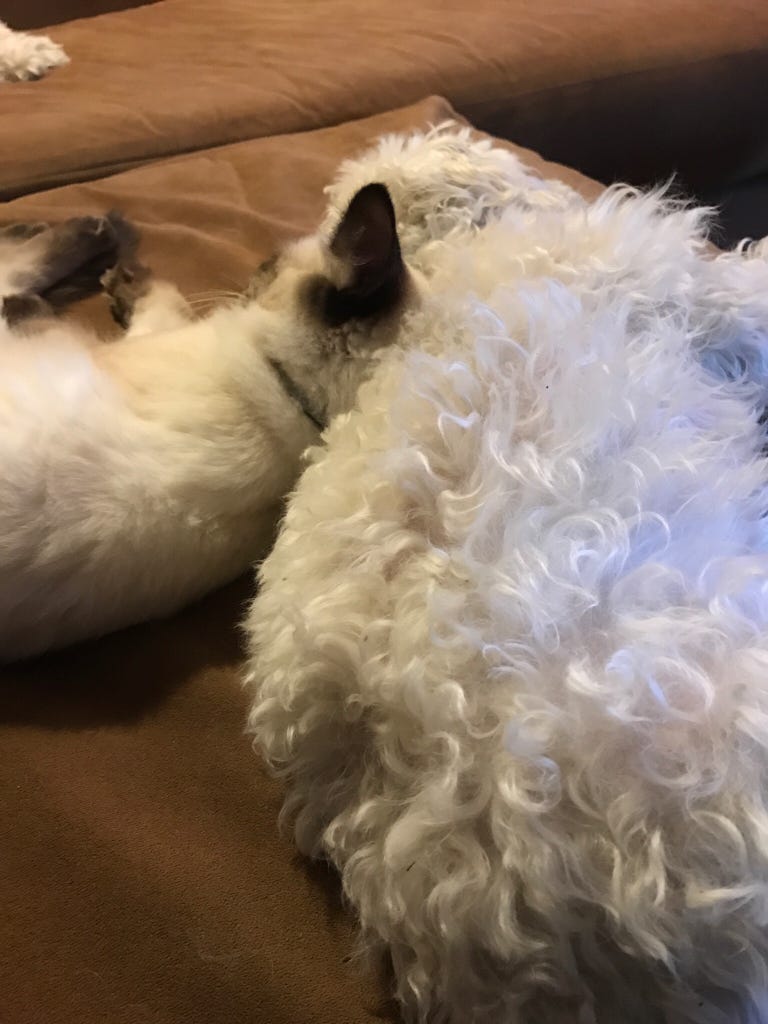
When a cat and toy poodle get along, they often share close spaces without tension. They might groom each other or rest side by side. These are strong signs they feel safe and comfortable together.
Your cat rubbing its head against the poodle or the dog lying calmly near the cat signals trust. Look for relaxed body language from both pets—they will have soft eyes and loose postures. Such moments can be a joyful reward for your patience and effort in helping them bond.
Potential Conflicts
Conflicts usually arise when either pet feels threatened or overwhelmed. Watch for hissing, growling, or snapping as clear warning signs. If your toy poodle barks loudly or chases persistently, the cat may react defensively.
Intervene early to prevent escalation. Offering separate resting spots and supervised introductions can reduce tension. Have you noticed any patterns in your pets’ interactions that hint at underlying stress? Identifying triggers helps maintain harmony.
Toy Poodles’ Behavior Around Cats
Toy Poodles often show curiosity and caution around cats. Their behavior depends on many things, such as personality and past experiences. Some Toy Poodles are friendly and gentle, while others may be more excitable or shy. Understanding their behavior helps create a peaceful home for both pets.
Initial Reactions
Toy Poodles may be curious and sniff the cat carefully. They often watch the cat’s movements before making a move.
Some poodles might bark softly or tilt their heads in interest. Others may feel nervous and keep their distance. The first meeting is important to set the tone for future interactions.
Long-term Relationships
Over time, many Toy Poodles and cats learn to live together peacefully. They can become companions, sharing space and sometimes playing.
Trust builds slowly with calm and consistent introductions. Some pairs even form strong bonds, grooming or resting near each other.
Factors Influencing Compatibility
- Temperament of both the Toy Poodle and the cat
- Age and energy levels of each pet
- Early socialization experiences with other animals
- How introductions are managed by the owner
- Amount of time spent together daily
Credit: www.poodleforum.com
Tips For Introducing Toy Poodles To Cats
Introducing a Toy Poodle to a cat can be a rewarding experience. Both pets can become great companions. Proper introductions are key to their friendship. Let’s explore some tips for a smooth introduction.
Safe Introduction Techniques
Start with separate spaces for each pet. Let them get used to each other’s scent. Swap their bedding or toys. This helps them recognize each other. Use a pet gate or a screen door for first meetings. This keeps them safe while they observe each other. Always supervise these early encounters.
Managing Early Encounters
Keep initial meetings short. Five to ten minutes is enough. Watch their body language closely. Look for signs of stress or aggression. If either pet seems anxious, separate them. Try again later. Reward calm behavior with treats. This reinforces positive interactions.
Encouraging Positive Interaction
Engage both pets with a shared activity. Play with a toy that interests both. This builds a positive association. Provide treats or praise when they behave well together. Gradually increase their time together. As they grow comfortable, they will interact more naturally.
Training Strategies For Harmony
Creating a peaceful home where your toy poodle and cat coexist happily takes intentional training and patience. The key is to build clear communication and trust between your pets. Training strategies that focus on obedience, positive reinforcement, and managing emotions can make a big difference in fostering harmony.
Obedience Commands
Teaching your toy poodle basic obedience commands is essential for controlling interactions with your cat. Commands like “sit,” “stay,”and “leave it”help you manage your dog’s behavior during moments of curiosity or excitement around the cat.
Start training in a quiet space free from distractions. Once your poodle masters the commands there, gradually introduce the cat into the environment. This step-by-step approach reduces stress for both animals and helps your dog understand boundaries.
Positive Reinforcement
Rewarding your toy poodle for calm and gentle behavior near the cat encourages good habits. Use treats, praise, or petting immediately after your dog displays patience or ignores the cat’s presence.
Have you noticed how your dog’s tail wag changes when it feels praised? That excitement can be redirected to wanting more good behavior around your cat. Consistency is crucial here—positive reinforcement should happen every time your dog acts appropriately.
Handling Jealousy And Possessiveness
Jealousy can arise when your toy poodle feels the cat is getting more attention. Watch for signs like growling, blocking access, or snapping. Address these by giving both pets individual attention regularly.
Try setting up separate feeding and resting areas to reduce competition. You can also introduce shared activities that involve both pets, like supervised playtime, to build positive associations. How do you balance attention between your pets without one feeling left out?
Real-life Stories
Many pet owners wonder about the relationship between Toy Poodles and cats. Real-life stories show a range of experiences. These stories help us understand how these animals interact. Some Toy Poodles and cats form close bonds. Others face challenges. Learning from these stories can guide future pet introductions.
Successful Coexistence
Some Toy Poodles live happily with cats. They share spaces without any fights. Owners report peaceful mornings and calm afternoons. Both pets enjoy playing and resting near each other. Their bond grows stronger over time.
- Gentle Toy Poodles respect cats’ space.
- Cats feel safe around calm dogs.
- Daily routines help build trust.
Challenges Faced
Not all stories end smoothly. Some Toy Poodles chase or bark at cats. Cats may hide or hiss back. This creates stress for both pets. Owners sometimes struggle to manage these tensions. Adjustments are needed to avoid conflict.
- High-energy Poodles can overwhelm shy cats.
- Unfamiliar scents cause suspicion.
- Sudden movements trigger chasing instincts.
Lessons Learned
Patience is key in building harmony. Slow introductions reduce fear and aggression. Owners teach pets to respect each other’s boundaries. Positive reinforcement encourages good behavior. Consistency helps pets feel secure and relaxed.
- Introduce pets in neutral spaces.
- Use treats to reward calmness.
- Separate pets during early stages.
- Observe body language closely.

Credit: zigly.com
Frequently Asked Questions
Do Toy Poodles Generally Get Along With Cats?
Toy Poodles can get along well with cats if introduced early. They are social and adaptable dogs, which helps. Proper supervision and gradual introduction improve their relationship and prevent conflicts.
How To Introduce A Toy Poodle To A Cat Safely?
Introduce them slowly in a neutral space. Keep both pets on leashes initially. Reward calm behavior and never force interaction. Patience and positive reinforcement are key for a smooth introduction.
Can Toy Poodles Live Peacefully With Cats At Home?
Yes, Toy Poodles can live peacefully with cats. Both animals need time to adjust and respect each other’s space. With training and supervision, they often form strong, friendly bonds.
Do Toy Poodles Have A Prey Drive Toward Cats?
Toy Poodles have a low to moderate prey drive. Early socialization reduces any chasing instincts toward cats. Monitoring their behavior ensures safe and harmonious interactions in multi-pet homes.
Conclusion
Toy Poodles can enjoy the company of cats with time and care. They often become good friends when introduced gently. Both pets need patience and a calm environment to get along. Watching their behavior helps you understand their comfort level.
Small steps build trust between them. Happy playtime and quiet moments show positive bonds. Remember, every pet is unique and learns at its own pace. A peaceful home helps both pets feel safe and loved.



Leave a Reply