
Have you ever looked at a cat and wondered what breed it might be? Identifying different cat breeds can be fun and surprisingly simple once you know what to look for.
Whether you’re a cat lover, thinking about adopting, or just curious, understanding the unique features of each breed helps you connect with your feline friend on a deeper level. You’ll discover clear, easy steps to recognize popular cat breeds by their looks, personality, and traits.
Ready to become a cat breed expert? Let’s dive in!
Cat Breed Categories
Cat breeds fall into different categories based on their origin and development. Recognizing these groups helps in identifying a cat’s background. Each category has unique traits that make the breeds special.
Natural Breeds
Natural breeds come from cats that evolved without human interference. These cats adapted to their environment over many years. Their features are shaped by nature, not by selective breeding. Examples include the Maine Coon and the Siamese. They often have strong health and distinct appearances.
Hybrid Breeds
Hybrid breeds result from crossing domestic cats with wild species. These breeds show traits from both wild and domestic ancestors. They tend to have exotic looks but behave like house cats. The Bengal is a well-known hybrid breed. Hybrids require special care and attention.
Man-made Breeds
Man-made breeds come from selective breeding by humans. Breeders choose specific traits to create new cat types. These cats may have unusual colors, fur types, or body shapes. Examples include the Persian and the Scottish Fold. Man-made breeds often need extra grooming and care.
Credit: www.pawaii.com
Key Physical Traits
Key physical traits help distinguish one cat breed from another. These traits include coat patterns, body shape, eye color, and ear style. Observing these features closely provides clues about a cat’s breed. Understanding these traits makes identifying breeds easier and more accurate.
Coat Patterns And Colors
Coat patterns vary widely among cat breeds. Common patterns include solid, tabby, tortoiseshell, and calico. Colors range from black, white, and gray to orange, cream, and blue. Some breeds have unique patterns like the pointed markings of Siamese cats.
- Solid: One uniform color without markings.
- Tabby: Stripes, spots, or swirls on the coat.
- Tortoiseshell: Mix of black and orange patches.
- Calico: White coat with large black and orange patches.
- Pointed: Darker color on ears, face, paws, and tail.
Body Shapes And Sizes
Body shape varies from slender to stocky. Sizes range from small to large. Some breeds have long legs and necks, while others are compact and muscular. The body type often reflects the breed’s original environment and purpose.
- Slender and long: Siamese, Oriental Shorthair.
- Compact and muscular: British Shorthair, Scottish Fold.
- Large and sturdy: Maine Coon, Norwegian Forest Cat.
- Small and delicate: Singapura, Minskin.
Eye Colors And Shapes
Eye color helps identify cat breeds too. Colors include blue, green, amber, and copper. Some breeds have distinct eye shapes like almond or round. Eye color and shape often match breed standards.
- Blue eyes: Siamese, Ragdoll.
- Green eyes: Russian Blue, Egyptian Mau.
- Amber or copper eyes: British Shorthair, Burmese.
- Almond-shaped eyes: Abyssinian, Oriental.
- Round eyes: Persian, Scottish Fold.
Ear Styles
Ear shape and size differ among breeds. Some have large, pointed ears. Others have small, rounded ears. Some breeds have unique ear features like folded or curled tips.
- Large and pointed: Oriental Shorthair, Abyssinian.
- Small and rounded: British Shorthair.
- Folded ears: Scottish Fold.
- Curled ears: American Curl.
- Tufted ears: Maine Coon.
Popular Cat Breeds
Cats come in various breeds, each with unique traits. Learning these can help you identify popular cat breeds. Here are some well-known ones to get familiar with:
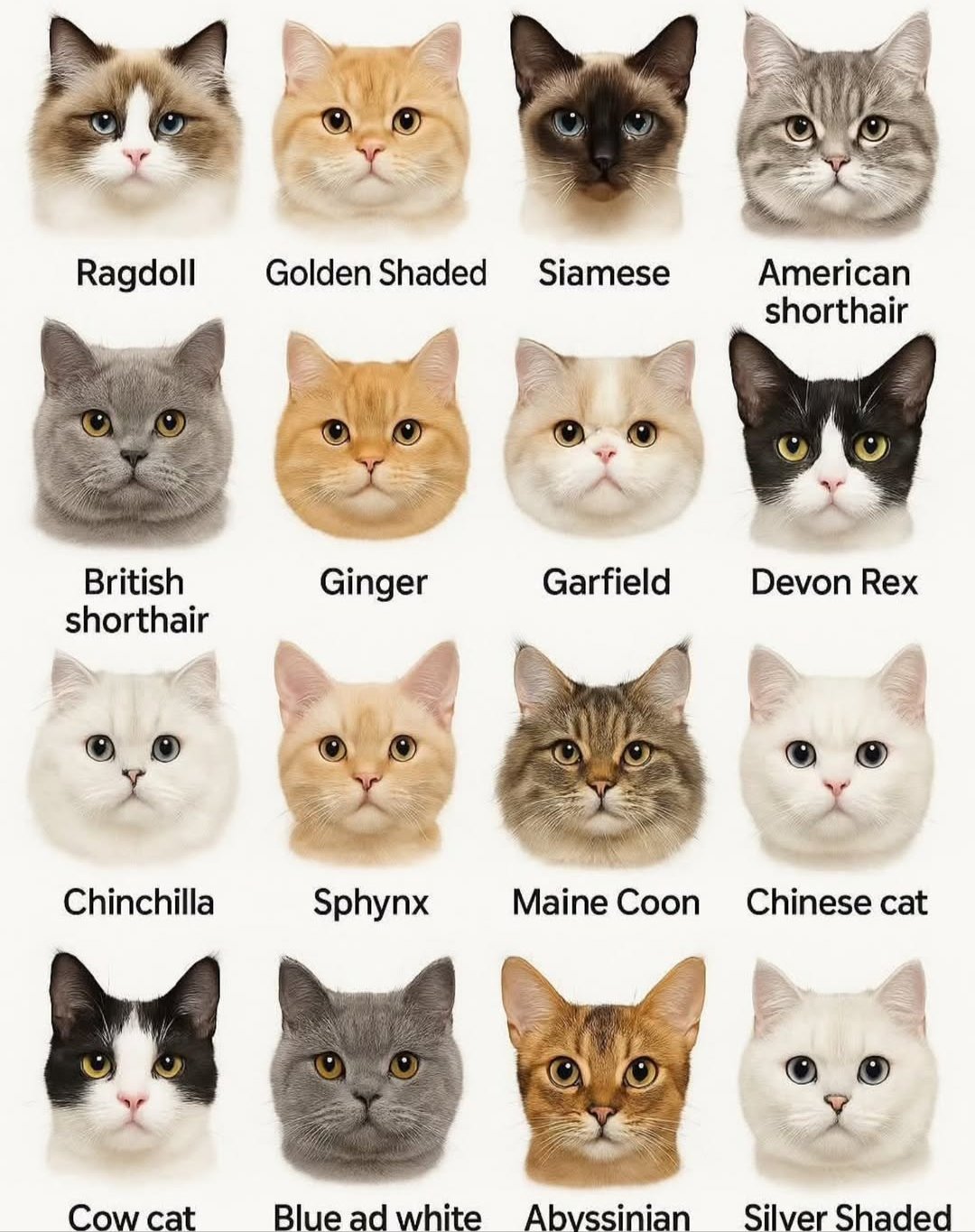
Siamese
Siamese cats are easily recognizable by their sleek, slender bodies. They have short coats and striking blue almond-shaped eyes. Their fur is usually a cream color with darker points on the ears, face, paws, and tail. Siamese cats are vocal and enjoy socializing.
Maine Coon
Maine Coons are one of the largest domesticated cat breeds. They have long, thick fur and tufted ears. Their bushy tails and friendly nature make them popular pets. Maine Coons are gentle giants, often getting along well with children and other pets.
Persian
Persian cats are known for their long, luxurious coats. They have a flat face with a short nose, giving them a distinct look. Their eyes are large and round, often in shades of blue or copper. Persian cats are calm and prefer a serene environment.
Bengal
Bengal cats have an exotic appearance with their leopard-like spots. Their coat is short and silky, often shimmering in the light. Bengals are energetic and love climbing and playing. They are intelligent and enjoy interactive toys and challenges.
Sphynx
Sphynx cats are famous for being hairless. Their skin feels warm and soft, like suede. Despite their lack of fur, they come in various colors and patterns. Sphynx cats are affectionate and enjoy being the center of attention. They are social and love to cuddle.
Credit: x.com
Behavioral Characteristics
Behavioral characteristics help distinguish cat breeds beyond their looks. Each breed has unique habits and ways of interacting. Observing these behaviors reveals clues about the cat’s breed. Pay attention to how active they are, their social habits, and how much they vocalize.
Activity Levels
Some cat breeds are very energetic and playful. Others prefer calm and quiet environments. For example, Siamese cats often need constant activity and mental stimulation. Persian cats usually enjoy lounging and relaxing. Noticing a cat’s energy helps identify its breed.
Social Tendencies
Cats vary in how much they enjoy company. Some breeds are very social and love being around people. Maine Coons often seek attention and enjoy playing with families. On the other hand, Russian Blues tend to be shy and reserved. Watching how a cat reacts to people gives insight into its breed.
Vocalization Patterns
Different breeds use their voices in unique ways. Siamese cats are known for their loud and frequent meows. Burmese cats often have softer, chirping sounds. Some cats are quiet and rarely meow, like the Scottish Fold. Listening to a cat’s vocal style can help identify its breed.
Tools For Identification
Identifying different cat breeds can feel overwhelming without the right tools. Fortunately, there are reliable resources designed to help you recognize unique traits and characteristics of various breeds. Using these tools can save you time and increase your confidence in spotting the breed that fits your curiosity or needs.
Breed Registries
Breed registries are official organizations that maintain detailed records about cat breeds. They provide standards describing physical features, temperament, and history for each breed. Checking breed registries like The International Cat Association (TICA) or the Cat Fanciers’ Association (CFA) can give you accurate and trustworthy information.
These registries often have photo galleries and descriptions that highlight subtle differences between similar breeds. Have you ever noticed how two cats look alike but behave very differently? Breed registries can explain those distinctions.
Online Breed Databases
Online breed databases offer a quick way to compare and contrast various cat breeds. Websites such as Cat Fanciers’ Association and Vetstreet provide searchable databases where you can filter breeds by traits like size, coat type, and personality. This makes it easier to narrow down your options based on what you observe.
Many of these databases also include user reviews and experiences, which add practical insights beyond textbook descriptions. Could reading real-life stories about a breed help you understand if it’s the right fit for your home?
Mobile Apps
Mobile apps bring breed identification right to your fingertips, often using image recognition technology. Apps like “Cat Scanner” or “Pet Identifier” allow you to take a photo of a cat and get instant breed suggestions. This tool is especially useful when you spot a cat outdoors or at a friend’s house and want to learn more instantly.
Some apps also track your favorite breeds and provide care tips, turning your phone into a mini expert. Have you tried using an app to identify a cat breed? It might surprise you how accurate these tools have become.
Common Misidentifications
Identifying cat breeds can be tricky, especially because many cats don’t fit neatly into one category. Misidentifying breeds is a common challenge, even among experienced cat owners and enthusiasts. Understanding these common misidentifications will help you recognize what to look for and avoid confusion.
Mixed Breeds Vs. Purebreds
You might assume a cat with distinct features belongs to a purebred line, but many cats are actually mixed breeds. Mixed breed cats often display a blend of traits from various breeds, which can make it hard to pin down their exact lineage.
For instance, a cat with a sleek coat and blue eyes might resemble a Siamese, but without pedigree, it’s likely a mix. Purebreds tend to have consistent physical traits and documented ancestry. Ask yourself: does this cat show uniform characteristics, or is there a mix of features that don’t quite match a known breed?
Understanding this difference saves you from inaccurate assumptions and helps you appreciate the unique charm of mixed breed cats.
Look-alike Breeds
Some cat breeds share very similar appearances, which causes frequent confusion. Take the Norwegian Forest Cat and the Maine Coon—they both have long fur and tufted ears but differ in size and face shape.
Another common mix-up is between the British Shorthair and the American Shorthair, which look alike but vary in body structure and coat patterns. You can use specific traits like eye shape, ear size, or tail length to tell these breeds apart.
Have you ever thought that your cat belongs to a particular breed only to discover it’s a different one entirely? Paying attention to these subtle differences can improve your breed identification skills dramatically.
Tips For Cat Lovers
Knowing how to identify different cat breeds adds joy to pet care. It helps understand their behavior and needs better. These tips guide cat lovers in recognizing unique traits and features of various breeds.
Observing Your Cat
Watch your cat’s body shape, size, and coat pattern closely. Note the color, fur length, and texture. Pay attention to eye color and ear shape. Observe their behavior and personality traits. These clues can hint at their breed background.
Consulting Experts
Visit veterinarians or professional breeders for advice. They have knowledge about breed standards and traits. Experts can often identify breeds through physical checks. They also suggest tests or documents that confirm lineage.
Joining Cat Communities
Engage with online forums and social media groups dedicated to cats. Share pictures and descriptions of your cat. Receive feedback from experienced cat owners and breeders. Learn from discussions about breed characteristics and care tips.

Credit: apps.apple.com
Frequently Asked Questions
What Are The Key Traits To Identify Cat Breeds?
Key traits include coat color, pattern, fur length, and eye shape. Body size and ear shape also help distinguish breeds.
How Can I Tell A Siamese Cat Apart?
Siamese cats have a sleek body, short fur, and striking blue almond-shaped eyes. Their coat shows color points on ears, face, paws, and tail.
Which Cat Breed Has The Longest Fur?
The Persian breed is known for its long, thick, and fluffy fur. They have a round face and short muzzle.
Can Coat Patterns Indicate Specific Cat Breeds?
Yes, certain patterns like tabby, calico, or colorpoint can hint at specific breeds or mixed heritage.
Conclusion
Identifying cat breeds can be fun and rewarding. Notice their size, fur, and colors carefully. Pay attention to eye shape and ear style. Each breed has unique traits to spot. Practice helps you recognize breeds faster. Enjoy learning about cats and their differences.
This knowledge makes pet care easier and more joyful. Keep observing, and you will improve with time. Remember, every cat is special in its own way.



Leave a Reply