Have you ever wondered how your cat manages to keep its head so clean and shiny? You might have noticed them spending a lot of time licking their fur, but there’s more to it than just a simple grooming routine.
Understanding how cats groom their heads can give you a deeper appreciation for their unique habits and help you care for your furry friend better. Keep reading to discover the surprising tricks cats use to reach those tricky spots and why this grooming ritual is so important for their health and happiness.
Cat Grooming Basics
Understanding how cats groom their heads reveals much about their behavior and health. Grooming isn’t just about looking neat; it serves several important functions that keep your cat comfortable and clean. Let’s break down the basics of cat grooming to help you appreciate this daily ritual.
Why Grooming Matters
Grooming helps your cat remove dirt, loose fur, and parasites from their coat. It also distributes natural oils, which keeps their fur shiny and soft. Have you noticed your cat spending a lot of time licking their head? That’s because the head is harder to reach, and grooming there is crucial for overall cleanliness.
Besides physical benefits, grooming reduces stress and strengthens your cat’s immune system. If you see your cat neglecting this routine, it might be a sign of health issues that need attention. How often do you observe your cat grooming their head compared to other body parts?
Common Grooming Techniques
Cats use their tongues, paws, and even teeth to groom their heads effectively. The rough texture of their tongue acts like a brush, removing debris and loose hair. They start by licking one paw and then use it to wipe their face and head in a gentle, circular motion.
Sometimes, cats nibble lightly around their ears or whiskers to clean those tricky spots. You might also see them rubbing their heads against objects or people, which helps spread their scent and maintain skin health. If your cat struggles with grooming their head, you can assist by gently brushing or wiping those areas.

Credit: www.purina.com
Head Grooming Methods
Cats use several smart ways to clean their heads. Their head grooming methods keep them neat and healthy. These actions also help remove dirt and loose fur. Cats show great care and skill while grooming.
Tongue And Teeth Usage
Cats use their rough tongues to clean their heads. The tongue’s tiny hooks catch loose fur and dirt easily. They also use their teeth gently to nibble hard-to-reach spots. This combination helps remove debris and keeps skin healthy.
Paw Cleaning Tricks
Cats lick their paws to moisten them. Then, they rub their wet paw over their heads. This acts like a soft, damp cloth for cleaning. Paw cleaning lets cats reach places their tongues cannot. It also helps spread natural oils on their fur.
Role Of Whiskers
Whiskers guide cats during head grooming. They sense objects and space near the face. Whiskers help cats avoid hurting eyes or ears. This makes grooming gentle and precise. Whiskers also keep balance while cats clean their heads.
Self-grooming Behavior
Cats are meticulous about keeping their heads clean and tidy. Their self-grooming behavior is a fascinating blend of instinct and precision. You might have noticed your cat spending a good amount of time licking their face and head, but have you wondered how often they do this and what patterns they follow?
Frequency And Patterns
Cats groom their heads several times a day. This includes licking their paws and then rubbing them over their face to clean hard-to-reach areas like around the eyes, ears, and chin.
They often follow a set routine:
- Start by licking their front paw.
- Use the dampened paw to wipe their face in smooth strokes.
- Repeat on the other side of the head.
Have you noticed how your cat pauses and looks around during grooming? This shows they are alert and taking breaks, which helps prevent over-grooming. Cats may groom more frequently after eating or when they feel stressed.
Signs Of Grooming Stress
Excessive grooming can indicate discomfort or stress. If your cat is licking its head to the point of redness or bald spots, this is a warning sign.
Other signs include:
- Repeated scratching or biting at the same spot.
- Sudden changes in grooming habits, like grooming less or more than usual.
- Visible skin irritation or sores.
Watching your cat’s grooming closely can help you catch these signs early. Have you seen your cat over-grooming? It might be time to check for allergies, parasites, or visit the vet.
Social Grooming Among Cats
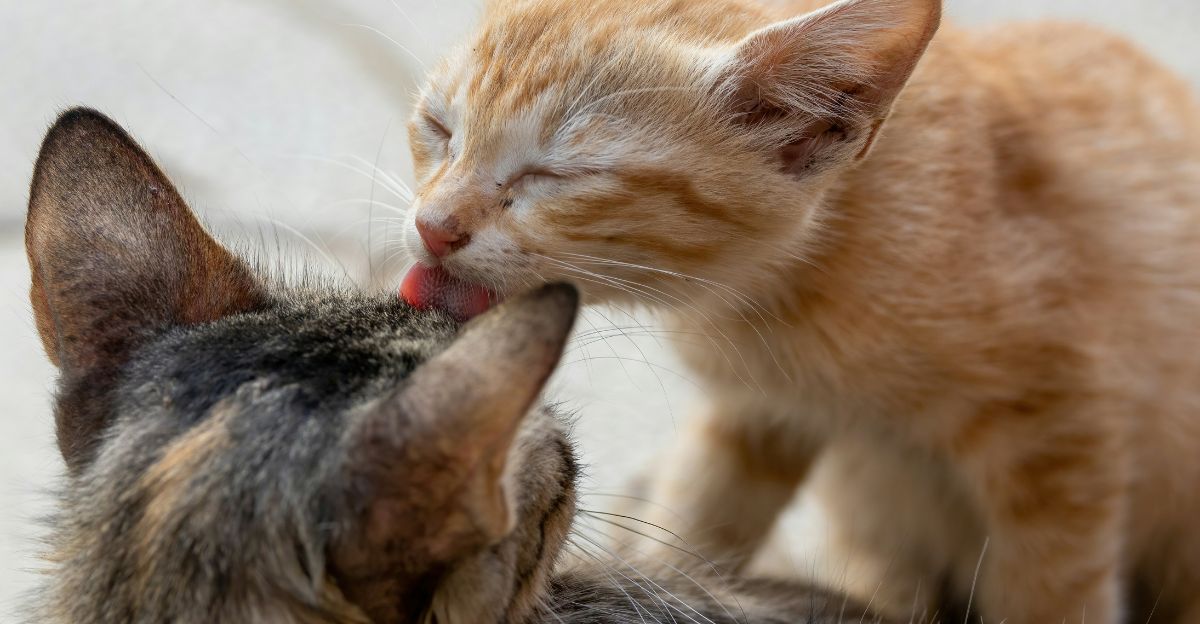
Social grooming among cats is a fascinating behavior that goes beyond mere cleanliness. When you observe cats licking each other’s heads, they’re doing more than just keeping tidy. This practice, known as allogrooming, is a crucial component of their social interaction.
Mutual Grooming Benefits
Grooming each other’s heads allows cats to reach places they can’t manage on their own, like the top of the head and behind the ears. This mutual grooming helps in removing debris and parasites, ensuring better hygiene. It’s a kind of teamwork that enhances their well-being and reduces health issues.
Imagine how you feel after a spa day—relaxed and refreshed. Cats experience a similar sense of comfort and cleanliness, which can lead to a more peaceful and harmonious group dynamic.
Bonding Through Grooming
Beyond physical benefits, grooming strengthens social bonds. When cats groom each other, they exchange scents, which reinforces their group identity and trust. This act of care can diffuse tension and reduce aggressive behavior.
Have you ever noticed how a gentle touch can calm your nerves? For cats, grooming serves a similar purpose, creating a calming effect and building strong emotional connections. It’s an essential part of their social structure, and one that’s critical for maintaining peace in multi-cat households.
Have you ever watched your cats groom each other and wondered about the depth of their connection? Next time, consider the profound role grooming plays in their social lives and how it can even influence your own relationship with them. Could encouraging more social grooming improve the harmony in your home?
Health Benefits Of Grooming
Grooming is more than a habit for cats. It plays a vital role in their overall health. Cats use grooming to keep their heads clean and healthy. This natural behavior helps them stay comfortable and protected in many ways.
Skin And Fur Maintenance
Cats use their tongues to clean dirt and debris from their fur. This keeps their coat smooth and shiny. Grooming spreads natural oils across their skin and fur. These oils help keep the fur soft and prevent dryness. Regular grooming also removes loose hair and reduces shedding. It helps avoid mats and tangles that can cause discomfort.
Parasite Control
Grooming helps cats remove parasites like fleas and ticks. Their rough tongues catch and remove these pests. This reduces the risk of infections and skin irritation. Grooming also helps cats notice any wounds or bites early. This allows them or their owners to act quickly for treatment.
Temperature Regulation
Grooming helps cats cool down in warm weather. When cats lick their fur, saliva evaporates and cools their skin. This natural cooling system helps maintain a steady body temperature. In colder weather, grooming fluffs up the fur. This traps warmth close to the skin, keeping cats cozy.

Credit: www.companionanimalpsychology.com
When Grooming Goes Wrong
Cats usually groom themselves with care and precision. Their heads are delicate areas that need gentle cleaning. Sometimes, grooming can go wrong. This can cause discomfort or health issues for your cat. Recognizing problems early helps keep your cat healthy and happy.
Common Grooming Issues
- Over-grooming:Cats may lick too much, causing hair loss or skin wounds.
- Under-grooming:Older or sick cats might neglect cleaning their heads, leading to dirt build-up.
- Matting:Tangled fur can hurt the skin and cause irritation.
- Parasites:Fleas or mites make cats scratch their heads often, damaging the skin.
- Infections:Cuts or sores from grooming can get infected if untreated.
When To Consult A Vet
Seek veterinary advice if your cat shows signs of pain or discomfort. Look for swelling, redness, or open wounds on the head. Notice if your cat scratches or shakes its head a lot. Watch for hair loss or scabs in the grooming area. Sudden changes in grooming habits need professional attention. Early treatment can prevent serious health problems.
Helping Your Cat Groom
Helping your cat groom their head is an important part of keeping them comfortable and clean. Cats usually lick and nibble to reach tricky spots, but they often need a little help from you. Your involvement can make grooming easier and more enjoyable for your furry friend.
Brushing Techniques
Use a soft-bristled brush designed for cats to gently stroke your cat’s head and face. Start by brushing around the cheeks and ears, moving slowly to avoid startling them.
Short, gentle strokes work best to remove loose fur and dirt. If your cat enjoys it, try brushing under the chin and around the neck. Pay attention to your cat’s reactions—if they pull away or seem uncomfortable, pause and try again later.
Safe Cleaning Tips
Sometimes, your cat might have debris or dirt on their head that brushing can’t remove. Use a damp, soft cloth or pet-safe wipes to gently clean these areas.
Avoid using human products like baby wipes or soaps, as they can irritate your cat’s skin. Always check the product label for pet safety before use.
Have you noticed your cat avoiding grooming certain spots? It could signal discomfort or pain, so consider checking with your vet if problems persist.

Credit: tryfurgo.com
Frequently Asked Questions
How Do Cats Use Their Tongues To Groom Their Heads?
Cats use their rough tongues to clean their heads. The texture removes dirt and loose fur efficiently. This self-grooming helps keep their head clean and healthy.
Why Do Cats Lick Their Paws Before Head Grooming?
Cats lick their paws to moisten them. Then they use their wet paws to wipe and clean their heads. This method reaches spots their tongues can’t easily access.
How Often Do Cats Groom Their Heads Daily?
Cats typically groom their heads several times a day. Grooming frequency depends on the cat’s breed, health, and environment. Regular grooming keeps their fur smooth and skin healthy.
Can Cats Groom Their Heads Without Using Their Paws?
Yes, cats can groom their heads using only their tongues. However, they use paws to reach difficult areas like the top of the head. Paws help spread saliva evenly for better cleaning.
Conclusion
Cats clean their heads with their tongues. Their rough tongues remove dirt and loose hair. They use their front paws to reach spots. Grooming helps cats stay healthy and comfortable. It also keeps their fur shiny and neat. Watching a cat groom shows their careful nature.
This simple act is part of their daily routine. Understanding this helps us care for cats better. Cats truly know how to keep themselves clean. Their grooming is both natural and important.



Leave a Reply