Are you unsure about how much cat food your adult cat really needs? Feeding your furry friend the right amount is more important than you might think.
Too little can leave them hungry and weak, while too much can lead to weight gain and health problems. You’ll discover simple tips to measure the perfect portion for your cat’s daily meals. Keep reading to learn how to keep your cat happy, healthy, and full of energy every day.

Credit: companion-vets.com
Daily Calorie Needs
Understanding your adult cat’s daily calorie needs is key to keeping them healthy. Cats require a certain amount of energy each day. This energy comes from calories in their food. Feeding the right amount helps maintain a good weight and supports their activity level.
Too few calories can cause weight loss and low energy. Too many calories can lead to obesity and health problems. Knowing how much your cat needs helps you choose the right portion size and type of food.
Factors Affecting Calorie Intake
Several factors influence how many calories your cat needs daily. Age is important; older cats usually need fewer calories. Activity level also matters. Active cats burn more energy and need more calories. Indoor cats often need less energy than outdoor cats.
Health status plays a role. Cats with certain illnesses may need special diets or calorie adjustments. Neutered or spayed cats tend to have slower metabolisms, lowering their calorie needs. Weight is another factor; overweight cats need fewer calories to lose weight.
Average Calorie Requirements
Adult cats generally need between 20 to 30 calories per pound of body weight each day. A typical 10-pound cat requires about 200 to 300 calories daily. This can vary based on the factors above.
| Cat Weight (lbs) | Daily Calories Needed |
|---|---|
| 8 | 160 – 240 |
| 10 | 200 – 300 |
| 12 | 240 – 360 |
Use these numbers as a guide. Adjust based on your cat’s weight changes and activity. Consult your vet for personalized advice.
Credit: www.chewy.com
Types Of Cat Food
Cats need the right type of food to stay healthy and happy. Choosing the correct cat food depends on their age, weight, and activity level. Adult cats require a balance of nutrients to maintain energy and support body functions. Understanding the types of cat food helps in feeding your cat properly.
Dry Food Portions
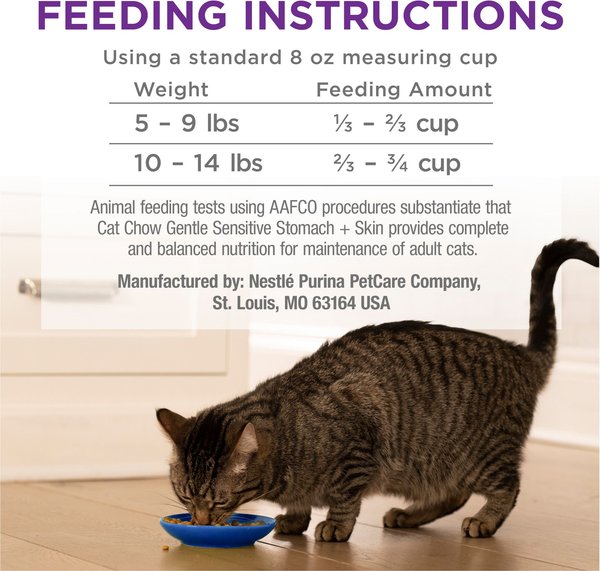
Dry cat food is easy to store and lasts longer. It usually contains more calories per cup than wet food. The typical portion for an adult cat is about 1/4 to 1/3 cup per day. Cats that are more active might need more, while less active cats need less. Always check the packaging for specific feeding guidelines.
Wet Food Portions
Wet cat food contains more moisture, which helps keep cats hydrated. A common portion size is one 3-ounce can per meal, twice a day. This helps meet both nutritional and water needs. Wet food can be richer and more palatable for picky eaters. Monitor your cat’s weight and adjust portions as needed.
Mixed Feeding Approach
Combining dry and wet food offers variety and balance. You might feed dry food in the morning and wet food in the evening. This approach helps control calorie intake and hydration. It also keeps your cat interested in meals. Measure portions carefully to avoid overfeeding and weight gain.
Portion Size Guidelines
Portion size is a key factor in keeping your adult cat healthy and happy. Feeding the right amount of food ensures your cat gets enough nutrients without gaining extra weight. But how do you know what the perfect portion looks like?
Measuring Food Accurately
Using a standard measuring cup or a kitchen scale helps you avoid guesswork. Scooping food roughly can lead to overfeeding or underfeeding, which affects your cat’s health over time.
Try weighing your cat’s food with a digital scale for the most precise portion. This small step can make a big difference in controlling calorie intake.
Have you ever noticed how a “heaping scoop” can actually be double the recommended amount? Measuring precisely keeps feeding consistent every day.
Adjusting Portions For Weight
Every cat’s ideal weight is different, so adjust portions based on your cat’s current condition. If your cat is gaining too much weight, reduce the amount slightly and monitor their progress.
Conversely, if your cat is losing weight or seems hungry, increase portions gradually. Always check with your vet before making major changes.
Keep a feeding diary for a week to track how changes affect your cat’s weight and energy. This helps you find the perfect balance and avoid overfeeding or underfeeding.
Credit: www.chewy.com
Special Considerations
Feeding an adult cat depends on its weight, activity, and health. Overfeeding can cause obesity, while underfeeding may lead to malnutrition. Adjust portions according to your cat’s needs and consult a vet for best advice.
Special considerations for feeding your adult cat can make all the difference in their health and happiness. Cats are as unique as their human companions, and their dietary needs can vary based on several factors. Understanding these nuances ensures your feline friend gets the nutrition they need without overfeeding or underfeeding.Activity Level Impact
The amount of energy your cat expends plays a crucial role in determining their food intake. A playful and energetic cat burning off calories by chasing toys around the house will need more food compared to a cat that prefers lounging in the sun all day. Pay attention to your cat’s daily activity and adjust their food portions accordingly.Health Conditions And Diet
Health conditions can significantly affect your cat’s dietary requirements. If your cat has diabetes, kidney issues, or is overweight, you might need to consult with a vet for a specialized diet plan. Special conditions often require precise nutrient balances, and your vet can guide you on the best food choices.Age-related Feeding Adjustments
As cats age, their metabolism and nutritional needs change. An older cat might require fewer calories but more protein to maintain muscle mass. Adjusting their diet to suit their age can help them stay healthy and active. Have you noticed any changes in your cat’s eating habits as they age? It could be time for a dietary adjustment. These considerations highlight the importance of not just feeding your cat, but feeding them right. Being attentive to these details can lead to a happier, healthier life for your feline companion.Feeding Schedule Tips
Setting a feeding schedule for your adult cat is more than just filling their bowl. It shapes their eating habits, energy levels, and even their behavior. A clear, consistent routine helps your cat know what to expect and prevents overeating or begging.
Number Of Meals Per Day
Most adult cats do well with two meals daily—morning and evening. This timing mimics their natural hunting pattern, which usually involves a few small meals throughout the day.
Some cats benefit from three or more smaller meals, especially if they tend to eat too quickly or get hungry between feedings. Watch your cat’s appetite and energy to find the right balance.
Have you noticed your cat acting restless or vocalizing around meal times? Adjusting the number of meals might help reduce their anxiety and improve their overall mood.
Consistent Feeding Times
Feeding your cat at the same times each day builds a reliable routine. Cats thrive on predictability, so stick to regular hours to keep them calm and content.
Consistency also makes it easier for you to track how much your cat eats daily. If you see sudden changes in appetite, you’ll know something might be wrong.
Try setting alarms or reminders on your phone if you struggle to feed your cat on time. This simple step can improve their digestion and prevent overeating.
Monitoring Your Cat’s Weight
Monitoring your cat’s weight helps ensure proper nutrition and health. Regular checks prevent problems linked to overfeeding or underfeeding. A healthy weight keeps your cat active and happy. Watch for physical and behavioral signs that show changes in feeding needs.
Signs Of Overfeeding
- Visible belly fat hanging or bulging.
- Difficulty jumping or climbing furniture.
- Reduced energy or less playful behavior.
- Rapid weight gain over a few weeks.
- Excessive eating or begging for food often.
Signs Of Underfeeding
- Ribs, spine, or hip bones become easy to see.
- Loss of muscle mass or weak body structure.
- Increased meowing or searching for food frequently.
- Slow or no weight gain despite feeding.
- Low energy and tiredness during playtime.
Common Feeding Mistakes
Feeding your adult cat might seem straightforward, but many pet owners unknowingly make mistakes that can affect their cat’s health. These common feeding errors often stem from good intentions but end up disrupting the balance of your cat’s diet. Understanding these pitfalls can help you provide the right amount and type of food your cat truly needs.
Overreliance On Treats
Do you find yourself giving your cat treats throughout the day? Treats can be a great way to bond, but too many can add unnecessary calories and unbalance your cat’s diet. Relying heavily on treats might make your cat less interested in their main meals, leading to nutritional gaps.
Try limiting treats to less than 10% of your cat’s daily calorie intake. Instead of frequent snacking, focus on consistent meal times with balanced portions. Remember, treats should complement, not replace, your cat’s regular food.
Ignoring Nutritional Labels
Have you ever picked cat food just because it’s on sale or looks appealing? Nutritional labels are your best guide to what your cat really needs. Ignoring them can mean missing out on essential nutrients or feeding inappropriate amounts.
Look for labels that specify protein content, fat, fiber, and calories per serving. Compare these details against your cat’s age, weight, and activity level. This way, you can choose food that fits your cat’s unique dietary needs rather than guessing.
Frequently Asked Questions
How Much Cat Food Does An Adult Cat Need Daily?
An adult cat typically needs about 20 calories per pound of body weight daily. This equals roughly 1/3 to 1/2 cup of dry food or 5. 5 ounces of wet food. Always adjust based on activity level and health.
Can Feeding Too Much Cat Food Harm My Cat?
Yes, overfeeding can lead to obesity, diabetes, and joint issues. Proper portion control helps maintain a healthy weight and overall well-being. Follow feeding guidelines and consult your vet for personalized advice.
How Often Should I Feed My Adult Cat Each Day?
Most adult cats do well with two meals per day. This helps regulate their metabolism and prevents overeating. Some cats may benefit from smaller, more frequent meals based on their needs.
Does Cat Food Type Affect Feeding Amount?
Yes, wet and dry foods have different calorie densities. Wet food usually contains fewer calories per volume than dry food. Always check feeding instructions on the package for accurate portions.
Conclusion
Feeding your adult cat the right amount of food keeps them healthy. Watch their weight and adjust food as needed. Healthy cats are happy cats. A balanced diet supports energy and good health. Always follow feeding guidelines on the cat food package.
Check with your vet for special needs or changes. Feeding your cat properly shows you care. Simple steps make a big difference in your cat’s life. Careful feeding helps your cat live a long, happy life.



Leave a Reply