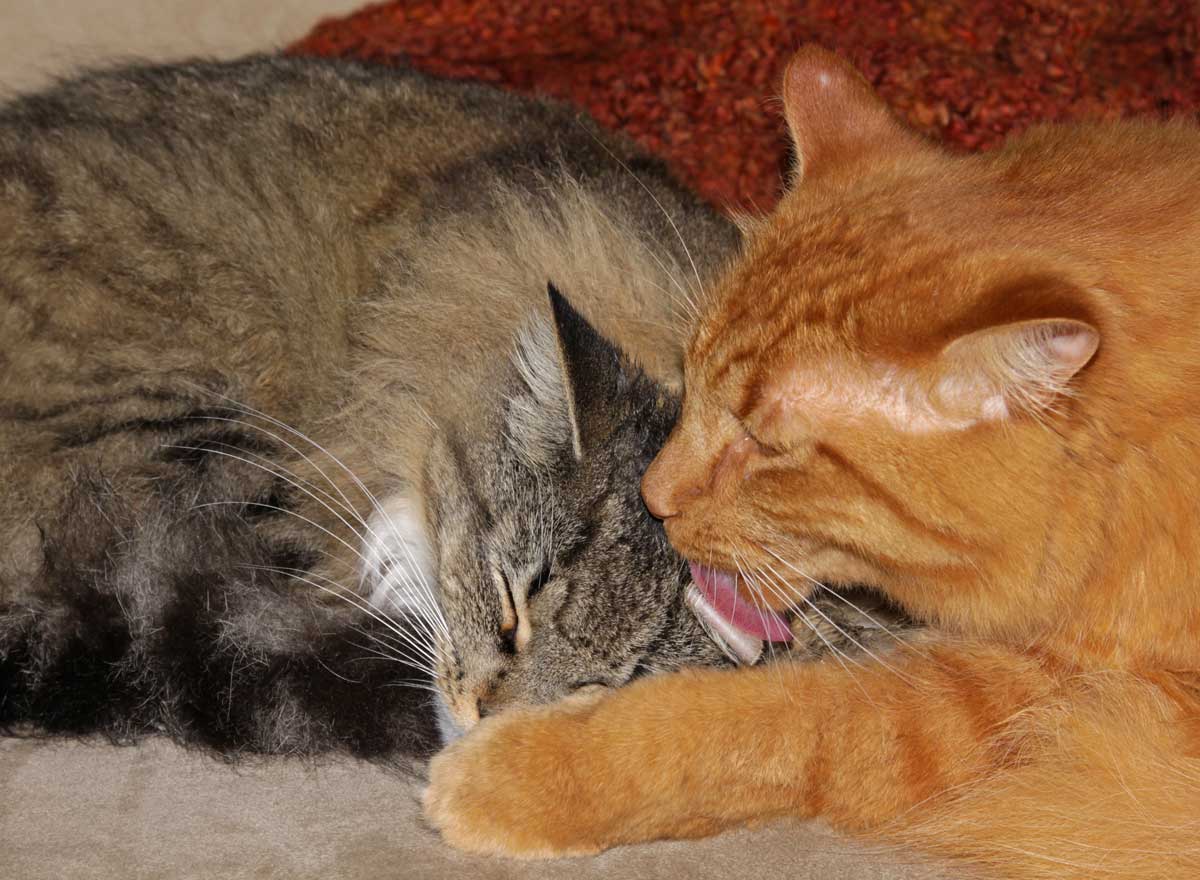
Have you ever watched one cat gently lick another and wondered why they do it? It’s more than just keeping clean.
When your cats groom each other, they’re sharing a special bond that goes deeper than you might think. Understanding this behavior can help you see your furry friends in a whole new light—and strengthen your connection with them too. Keep reading to discover the surprising reasons behind this sweet act and what it means for your cats’ happiness.

Credit: www.petsmont.com
Social Bonds In Cats
Cats are social animals with unique ways to show care and trust. Grooming each other is one important way cats build and keep their social bonds strong. This behavior helps cats feel safe and connected within their group. It shows friendship and helps maintain peace among cats living together. Understanding why one cat grooms another reveals how cats communicate and support each other.
Grooming As A Sign Of Friendship
When a cat grooms another, it shows trust and affection. Cats pick spots their friend cannot reach. This action means, “I care about you.” It helps reduce stress and makes cats feel calm. Grooming builds positive feelings between cats. Friends often groom more to keep their bond strong.
Strengthening Group Ties
Grooming helps cats stay close as a group. It creates harmony and reduces fights. Cats that groom each other share a strong connection. This teamwork helps them survive and live happily. Grooming also spreads a group scent, making cats feel like one family. This scent signals safety to all members.
Credit: hellopetsinc.com
Benefits Of Mutual Grooming
Mutual grooming helps cats build trust and strengthen their bond. It also keeps their fur clean and reduces stress. Cats show care and friendship by grooming each other.
The benefits of mutual grooming in cats extend beyond mere cleanliness. This behavior builds trust and strengthens their bond. Cats engage in this practice instinctively, leading to various advantages.Hygiene And Health
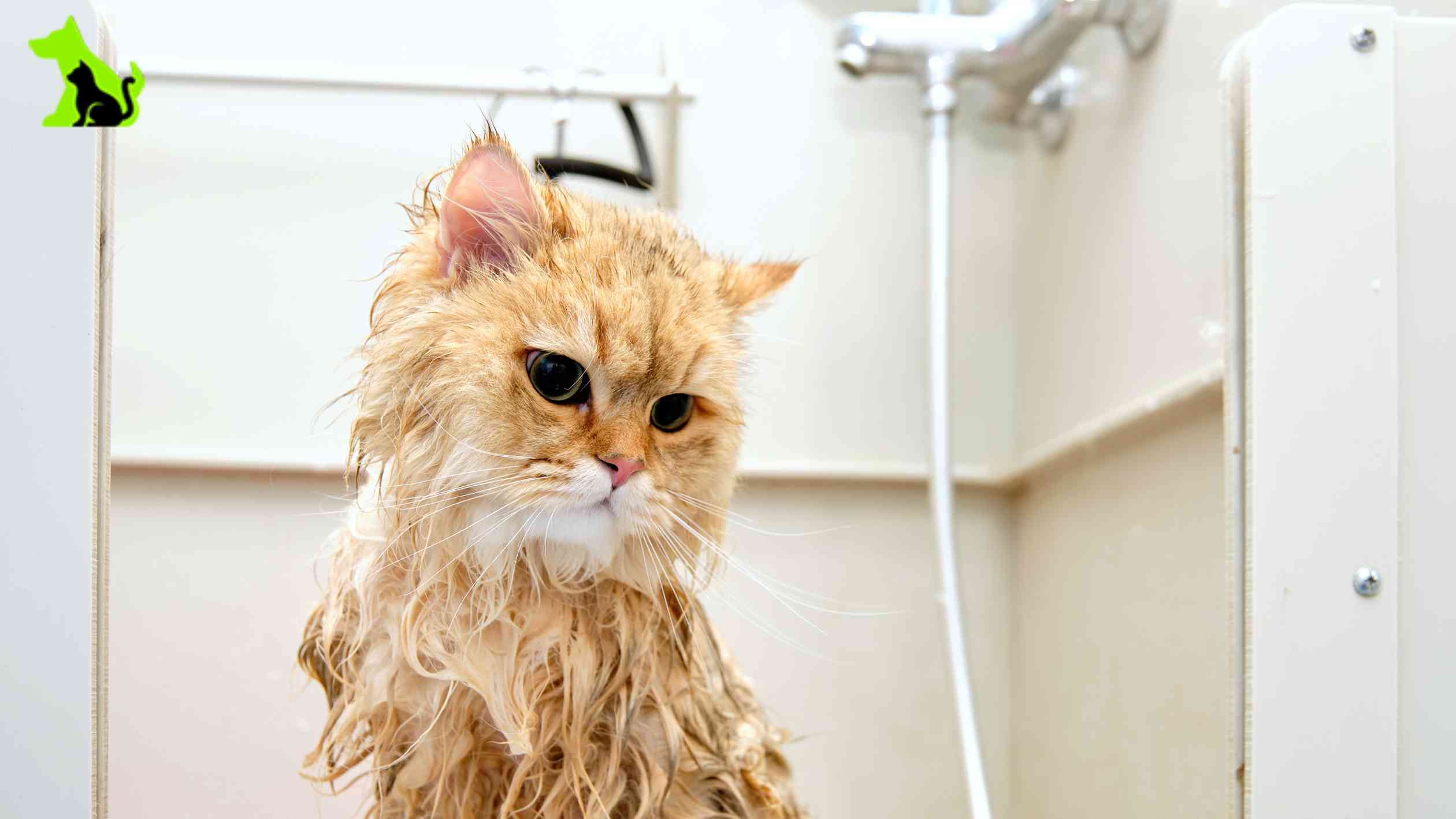
Mutual grooming helps cats stay clean. Cats groom each other to remove dirt and loose fur. This prevents matting and reduces hairballs. By licking each other, they can reach spots they can’t groom alone. This also aids in distributing natural oils across their coats. These oils keep their fur shiny and skin healthy. Regular grooming helps in detecting parasites early. Fleas or ticks can be spotted and removed promptly.Stress Relief And Comfort
Grooming serves as a stress reliever for cats. The rhythmic licking provides comfort. It has a calming effect on both cats involved. This shared activity releases endorphins, which help reduce anxiety. Cats feel more secure and relaxed afterward. Grooming sessions often end in a nap together. This highlights the comfort and trust they share.Hierarchy And Dominance
Understanding the role of hierarchy and dominance helps explain why one cat grooms another. Cats don’t just groom for cleanliness; grooming often reflects their social order. This behavior can reveal which cat feels in charge and which one accepts a lower rank.
Grooming And Social Status
Grooming is a powerful signal in cat communities. The cat doing the grooming often holds a higher social status. When you see one cat licking another, it’s not just about hygiene; it’s about showing control and care.
Your cat might groom a less dominant cat to reinforce its position as the leader. This action can reduce tension and maintain peace in their group. Have you noticed if the cat who grooms also eats first or takes the best resting spots?
Submissive Vs Dominant Roles
Submissive cats usually accept grooming from dominant ones without resistance. This acceptance is a sign of trust and acknowledgment of the social ladder. The groomed cat might even return the favor, but often in a more cautious or limited way.
Dominant cats use grooming to assert their role, while submissive cats use it to show respect and avoid conflict. Next time you observe your cats, watch their body language during grooming. Does the groomed cat look relaxed or tense? That can tell you a lot about their relationship.
When Grooming Becomes Excessive
Grooming between cats is usually a sign of bonding and affection. However, sometimes this behavior can escalate beyond normal care and turn into excessive grooming. When one cat grooms the other too much, it might signal underlying problems that need your attention.
Signs Of Anxiety Or Stress
Excessive grooming often shows up alongside signs of anxiety or stress in cats. You might notice bald patches or raw spots where the fur is over-groomed. The groomed cat might also act withdrawn or hide more than usual.
Other signs include:
- Restlessness or pacing
- Repeated vocalizations or meowing
- Changes in eating or litter box habits
Have you observed your cats grooming each other but then one seems uncomfortable or agitated? That’s a red flag to watch closely.
Intervention Tips
If you see grooming turning excessive, take steps to reduce stress in your cats’ environment. Provide quiet spaces and plenty of toys to distract them.
Try these actions:
- Separate the cats temporarily to give them space
- Introduce pheromone diffusers to calm their nerves
- Spend extra time playing with each cat individually
Observe how your cats respond and be patient. Sometimes, simply changing their routine or environment can stop the behavior. If it continues, consult your vet for advice on anxiety management or possible medical causes.
How To Encourage Positive Grooming
Encouraging positive grooming between cats strengthens their bond and keeps their relationship healthy. It’s not just about cleanliness; it’s a social behavior that builds trust and comfort. You can help your cats develop this habit by setting the right conditions and managing their introductions thoughtfully.
Creating A Calm Environment
Your home’s atmosphere plays a big role in how cats interact. A calm space reduces stress and makes cats more open to grooming each other.
Try these simple tips:
- Keep noise levels low and avoid sudden loud sounds.
- Provide cozy spots where cats feel safe, like soft beds or quiet corners.
- Use calming scents or pheromone diffusers designed for cats.
Have you noticed how your own mood affects your cats? When you’re relaxed, they often mirror that calmness.
Introducing Cats Properly
Proper introductions are key to positive grooming. Cats are territorial and cautious, so rushing their first meetings can backfire.
Follow these steps to help them get comfortable:
- Start by letting them smell each other’s bedding before any face-to-face meetings.
- Use a barrier like a baby gate or screen door to allow visual contact without direct interaction.
- Gradually increase supervised time together, watching for signs of stress or aggression.
Patience is crucial—forcing interactions too soon can create fear instead of friendship. How much time do you give your cats to adjust? Sometimes waiting an extra day or two makes all the difference.

Credit: www.youtube.com
Frequently Asked Questions
Why Does One Cat Groom Another Cat?
One cat grooms another to strengthen social bonds and show affection. It helps reduce stress and maintain group harmony. Grooming also promotes cleanliness and shares scents, creating a sense of unity among cats.
Is Mutual Grooming A Sign Of Cat Friendship?
Yes, mutual grooming indicates strong friendship between cats. It builds trust, reduces tension, and reinforces their social connection. Cats that groom each other usually have a close, positive relationship.
Can Grooming Prevent Fights Between Cats?
Yes, grooming helps prevent fights by promoting peaceful interactions. It reduces aggression and signals acceptance within the group. This behavior maintains a calm environment and supports group stability.
Does Grooming Help Cats Feel Safe Together?
Absolutely, grooming makes cats feel safe and secure. It lowers anxiety and reinforces social bonds. Cats that groom each other usually live in a comfortable, trusting environment.
Conclusion
Cats grooming each other shows trust and friendship. This behavior helps them stay clean and calm. It also builds strong bonds within their group. When one cat grooms another, it feels safe and cared for. Watching this can teach us about their social life.
Understanding why cats groom each other makes us better pet owners. It shows how important connection is for animals. Next time you see cats grooming, remember they share love and comfort. This simple act means a lot in their world.

Leave a Reply