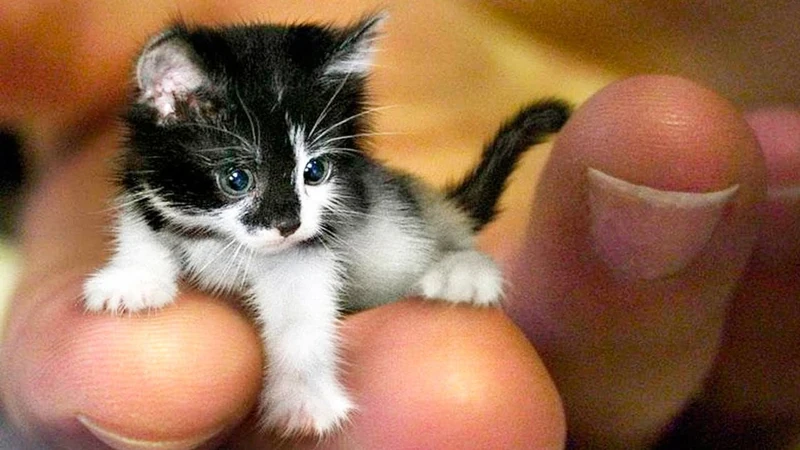
Have you ever come across pictures or videos of those oddly adorable Tinker Toy cats and wondered if they’re real? You’re not alone.
These curious creatures look so unique that it’s hard to believe they actually exist. If you’ve been asking yourself, “Are Tinker Toy cats real? ” then you’re about to get some surprising answers. Keep reading, because what you’ll discover might change the way you see these fascinating cats forever.

Credit: blog.mascotaysalud.com
Origin Of The Tinker Toy Cat Myth
The origin of the Tinker Toy Cat myth is a mix of imagination and cultural tales. It blends old stories, creative minds, and the power of media. This myth puzzles many, as it sounds both strange and familiar. Understanding its roots helps us see why it feels so real to some.
Early References And Stories
Stories about Tinker Toy Cats first appeared in small local tales. These stories described cats made from small wooden pieces, like toys. People shared these tales around campfires and in books. They often mixed fact with fantasy, making it hard to tell truth from fiction.
These early stories sparked curiosity. Some believed these cats were magical. Others saw them as a fun idea for children’s games. Over time, these stories grew and changed with each retelling.
Cultural Influences
Different cultures added their own touch to the myth. In some places, the Tinker Toy Cat symbolized creativity and playfulness. In others, it was linked to mystery or luck. These cultural meanings helped the myth spread and evolve.
Craft traditions also played a role. Many cultures use wooden toys and crafts, making the idea of a Tinker Toy Cat easy to imagine. This helped the myth fit naturally into various cultural stories and beliefs.
Spread Through Media
Books, cartoons, and online videos gave the myth new life. Media showed Tinker Toy Cats as fun, quirky creatures. This made the myth popular among children and adults alike.
Social media and forums helped people share stories and images. The myth grew faster and reached a wider audience. This constant sharing blurred the lines between real and imagined.
Characteristics Attributed To Tinker Toy Cats
The idea of Tinker Toy Cats sparks curiosity because they don’t fit the usual descriptions of feline breeds. Understanding the characteristics attributed to these mysterious cats helps clear up confusion and reveals why they capture so much attention. Let’s look closely at what people say about their looks, behavior, and common misunderstandings.
Physical Appearance Descriptions
Tinker Toy Cats are often described as having an unusual, almost mechanical look. People mention their bodies appearing segmented or jointed, similar to the classic children’s construction toy. Their limbs might look oddly angled or connected in ways that seem unnatural for a living creature.
Some describe their fur as patchy or unusually textured, which adds to their strange appearance. Eye color is often noted as bright or glowing, making them stand out in dim light. These physical traits make you wonder if you’re seeing a real cat or a crafted model.
Behavioral Traits
Stories about Tinker Toy Cats often include odd behaviors that don’t match typical cat actions. They might move stiffly or with jerky motions, unlike the smooth grace you expect from felines. Some say these cats seem to “click” or make mechanical sounds when they move.
Others report that these cats show unusual intelligence or awareness, almost as if they’re watching more closely than normal pets. If you’ve ever noticed a cat behaving in a way that felt off or robotic, you might relate to these accounts. It makes you question how much you really understand about animal behavior.
Common Misconceptions
Many people assume Tinker Toy Cats are just a myth or a product of imagination. Some confuse them with actual mechanical toys or sculptures mistaken for real animals. Others think these descriptions come from exaggerations or misunderstandings of unusual cat breeds.
One common misconception is that they are a new breed of cat. However, no official records or breeders confirm their existence. Have you ever seen something that didn’t quite fit your idea of a cat? Reflecting on those moments might give you a fresh perspective on these elusive creatures.
Scientific Evidence And Research
Curiosity often leads us to question the existence of unique creatures, such as the rumored Tinker Toy Cats. Do these elusive cats truly roam our world, or are they merely figments of our imagination? Scientific evidence and research provide a fascinating lens through which to explore this mystery.
Biological Possibility
The concept of Tinker Toy Cats raises questions about biological possibility. Could a cat with such distinctive characteristics exist within the known genetic framework? While genetic mutations can lead to unusual traits, experts have not identified any genetic basis for the specific features associated with Tinker Toy Cats.
Consider how nature sometimes surprises us with unexpected anomalies. Could Tinker Toy Cats be an undiscovered genetic marvel waiting to be revealed?
Expert Opinions
Many experts in the field of feline genetics have weighed in on the topic. Most agree that while the idea is intriguing, there is no scientific evidence to support the existence of Tinker Toy Cats. Renowned veterinarians and geneticists stress the need for credible evidence before accepting such claims.
Have you ever wondered how experts distinguish between myth and reality in the world of genetics? Their skepticism is a reminder that extraordinary claims require extraordinary evidence.
Lack Of Verified Sightings
Despite numerous anecdotes, there is a lack of verified sightings of Tinker Toy Cats. No credible photographic or physical evidence has surfaced to support their existence. This absence raises questions about the reliability of reported encounters.
Imagine stumbling upon a creature thought to be myth; would you capture the moment to share with the world? The lack of such documentation keeps the mystery alive and invites further scrutiny.
As you ponder the existence of Tinker Toy Cats, consider the role of evidence in distinguishing myth from reality. The search for truth continues, fueled by curiosity and the hope of uncovering the unknown.
Credit: www.etsy.com
Similar Creatures In Folklore And Popular Culture
When you hear about Tinker Toy cats, it’s natural to wonder if similar creatures have appeared in stories or legends before. Many cultures have their own versions of mysterious or magical cats. These creatures often blend reality with imagination, shaping how people perceive the natural world.
Mythical Cats Around The World
Across the globe, cats have been surrounded by myths and superstitions. In Japanese folklore, the Maneki-nekois believed to bring good luck and fortune. Meanwhile, in Norse mythology, the goddess Freyja’s chariot is pulled by giant cats, symbolizing protection and fertility.
Some African tales speak of cats as guardians of the spirit world. These stories often highlight cats’ mysterious nature, making them both revered and feared. Have you ever noticed how cats seem to appear at just the right moment? This might be why they’re often linked with the supernatural.
Fictional Cats In Literature And Film
Fiction has given us many unforgettable cats that feel almost real. Think about Cheshire Catfrom “Alice in Wonderland,” with its mischievous grin and ability to vanish. Or consider Salemfrom “Sabrina the Teenage Witch,” whose sarcastic personality adds humor and mystery.
These fictional cats often carry symbolic meanings or magical powers. They make us question where the line between reality and fantasy lies. Have you ever found yourself wondering if these characters could exist beyond the page or screen?
How These Shape Beliefs
Stories about mythical and fictional cats influence how you and others see real cats. They can make you think twice about a cat’s stare or sudden appearance. This mix of folklore and fiction builds a shared cultural understanding that often feels personal.
Next time you encounter a cat behaving oddly, ask yourself: is this just animal instinct, or could there be something more? Your beliefs about these creatures might be shaped by tales passed down through generations or by the stories you enjoy today.
Why The Myth Persists Today
The myth of Tinker Toy cats continues to capture attention despite lacking real evidence. This ongoing fascination stems from several social and psychological factors. The idea of a cat made from Tinker Toys sparks curiosity and wonder. It blends childhood nostalgia with a magical twist, making the myth hard to forget.
Psychological Appeal
People often enjoy stories that mix reality with fantasy. The concept of Tinker Toy cats appeals to the imagination. It offers a sense of mystery and charm. Such myths satisfy a desire to believe in something unusual and playful. They provide comfort in a world that often feels ordinary. The simplicity of Tinker Toys combined with the liveliness of cats creates a unique allure.
Role Of Social Media
Social media platforms help spread the myth quickly. Images, videos, and posts make the story more visible. People share content without checking facts, boosting the myth’s reach. Viral posts tap into emotions, making the story memorable. Online discussions and memes keep the myth alive. Social media’s fast pace helps myths like this thrive.
Community And Storytelling
Communities enjoy sharing and expanding such myths together. Storytelling adds new layers and details over time. Fans create their own versions and experiences. This interaction builds a shared culture around the myth. It feels like belonging to a special group. The ongoing exchange of stories keeps interest strong and active.
How To Identify Real Cats Vs. Mythical Ones
Distinguishing real cats from mythical ones requires careful observation and knowledge. Many stories about unusual cats, like Tinker Toy Cats, blend fact with fiction. Understanding clear signs helps separate truth from myth. This section guides you through simple ways to identify genuine cat breeds and recognize fabricated tales.
Recognizing Common Cat Breeds
Real cats belong to known breeds with specific features. Common breeds include Persian, Siamese, Maine Coon, and Bengal. Each breed has distinct traits such as fur length, color patterns, and body shape.
- Look for consistent physical traits. Real cats have natural fur patterns.
- Check for breed standards accepted by cat associations.
- Observe behavior typical to certain breeds, like playfulness or shyness.
Signs Of Fabricated Stories
Mythical cats often come with strange or unbelievable traits. Stories may describe impossible colors or shapes. These tales usually lack clear, verifiable evidence.
- Beware of exaggerated claims without photos or scientific proof.
- Mythical cats often appear suddenly in stories without history.
- Look for inconsistencies or repeated phrases in multiple sources.
Evaluating Sources
Trustworthy information comes from reliable sources. Scientific studies, animal experts, and official cat organizations provide accurate data. Social media and rumor sites may spread myths quickly.
- Check if the source is well-known and credible.
- Verify facts with multiple independent references.
- Avoid sources that rely only on anecdotal stories or hearsay.

Credit: www.reddit.com
Frequently Asked Questions
Are Tinker Toy Cats Real Animals?
No, Tinker Toy Cats are not real animals. They are fictional or artistic creations inspired by Tinker Toy construction sets, representing cat-like figures.
What Are Tinker Toy Cats Made Of?
Tinker Toy Cats are typically made from wood or plastic, resembling parts of classic Tinker Toy sets, assembled to look like cats.
Can You Build A Tinker Toy Cat At Home?
Yes, you can build a Tinker Toy Cat at home using original Tinker Toy pieces or similar construction toys creatively.
Why Are They Called Tinker Toy Cats?
They are called Tinker Toy Cats because their design mimics cats using Tinker Toy parts, blending playful construction with feline shapes.
Conclusion
Tinker Toy cats are not real animals you can find. They are creative toys made from wooden pieces. People use them to build fun shapes and figures. These toys help kids learn and play at the same time. Imagining a Tinker Toy cat is part of the fun.
They mix creativity with simple construction skills. So, while you can make a Tinker Toy cat, it won’t purr or move. It’s a great way to enjoy building and using your imagination.


Leave a Reply