
Are you wondering if you’re feeding your adult cat the right amount of food each day? Giving your furry friend too much or too little can affect their health in surprising ways.
Finding the perfect balance isn’t always easy, but it’s crucial for your cat’s happiness and well-being. You’ll discover simple guidelines to help you understand exactly how much food your adult cat needs daily. Keep reading to ensure your cat stays healthy, energetic, and content every single day.
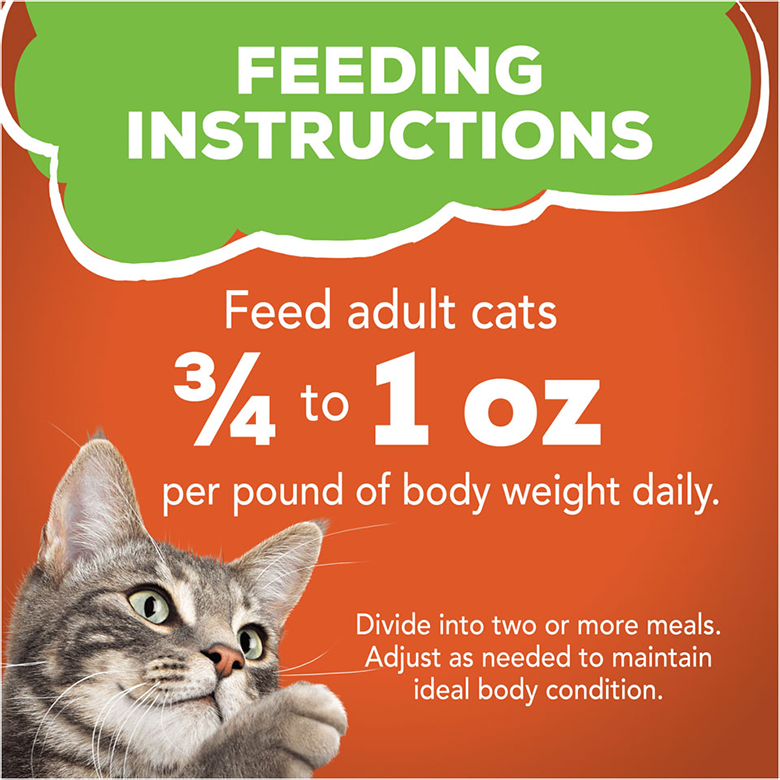
Credit: purinaexpress.com
Daily Calorie Needs
Understanding your adult cat’s daily calorie needs is key to keeping them healthy and energetic. Just like people, cats require a certain amount of energy from food each day to maintain their weight, support bodily functions, and fuel their activities. Knowing how many calories your cat needs helps you avoid overfeeding or underfeeding, both of which can cause health problems.
Factors Affecting Calorie Requirements
Several things influence how many calories your cat needs daily. Age plays a role; younger adult cats often require more calories to stay active, while older cats may need fewer. Activity level is another big factor—cats that roam outdoors or play frequently burn more energy than those who lounge indoors most of the day.
Body size matters too. Larger cats naturally need more calories than smaller ones. Health conditions can also change calorie needs; for example, an overweight cat might need fewer calories to lose weight, while a cat recovering from illness might require more.
Calculating Your Cat’s Calorie Intake
Calculating your cat’s calorie needs starts with their weight. A simple formula to estimate daily calories is:
| Cat’s Weight (lbs) | Daily Calories Needed |
|---|---|
| 5 | 180-200 |
| 8 | 240-280 |
| 10 | 280-320 |
You can also use a more precise method by multiplying your cat’s weight in kilograms by 40-45 calories per kg. For example, a 4 kg (about 9 lbs) cat might need around 160-180 calories daily. Keep in mind this is a starting point; adjust based on your cat’s activity and condition.
Ask yourself: Is your cat gaining or losing weight unexpectedly? This could mean you need to tweak their daily calorie intake. Regularly monitoring their weight and consulting your vet can ensure you’re feeding the right amount.
Credit: www.petco.com
Portion Sizes By Cat Weight
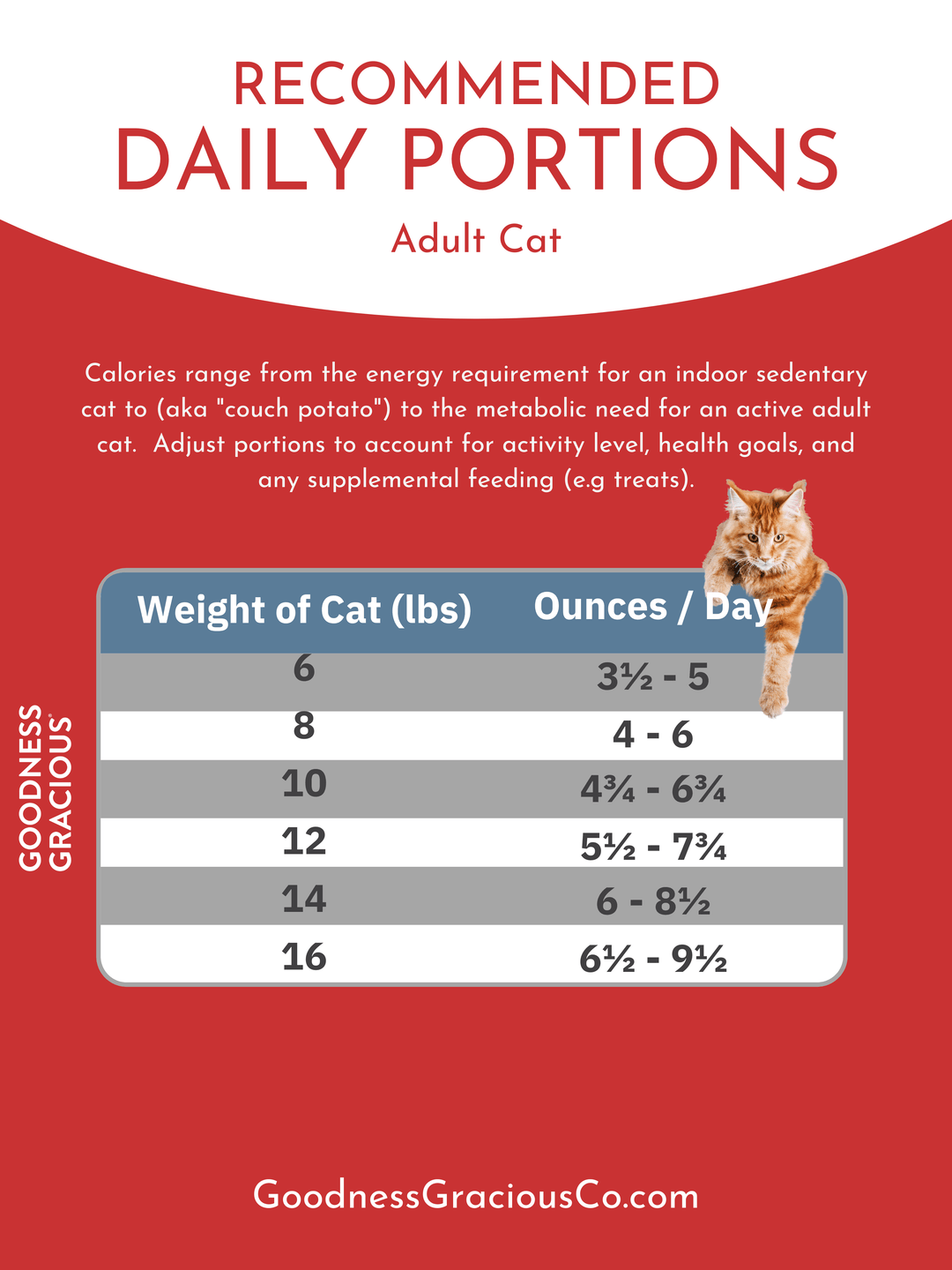
Portion sizes for adult cats vary mainly by their weight. Feeding the right amount keeps cats healthy and active. Overfeeding can lead to obesity, while underfeeding causes weakness. Cats need balanced portions matching their body size and energy needs.
Below is a guide to help you understand how much food to give based on your cat’s weight. This helps maintain ideal weight and supports their daily energy.
Small Cats
Small cats usually weigh less than 8 pounds. They need fewer calories daily. On average, small cats need about 180 to 200 calories per day.
- Dry food: Around 1/4 to 1/3 cup daily
- Canned food: About 3 to 4 ounces daily
Feed small cats in two or three meals to avoid hunger.
Medium Cats
Medium cats weigh between 8 and 12 pounds. Their daily calorie need ranges from 200 to 280 calories.
- Dry food: About 1/3 to 1/2 cup daily
- Canned food: Around 4 to 6 ounces daily
Split their food into two meals for steady energy.
Large Cats
Large cats weigh over 12 pounds. They require more calories, about 280 to 320 daily.
- Dry food: Nearly 1/2 to 2/3 cup daily
- Canned food: Approximately 6 to 8 ounces daily
Offer meals in two portions to support their size and activity.
Types Of Cat Food
Understanding the types of cat food available is crucial for any cat owner looking to ensure their feline friend’s health and happiness. Each type of cat food—whether dry, wet, or raw—offers unique benefits and challenges. Making the right choice can impact your cat’s energy levels, coat quality, and overall well-being.
Dry Food Benefits And Limits
Dry food is a convenient option for many cat owners. It is easy to store, has a long shelf life, and is generally more affordable. Additionally, the crunchy texture can help reduce tartar buildup on your cat’s teeth.
However, dry food has its limitations. It typically contains more carbohydrates, which can lead to weight gain if not managed carefully. Also, it lacks the moisture content that cats need for proper hydration. If you choose dry food, ensure your cat has constant access to fresh water.
Wet Food Advantages
Wet food is an excellent choice for cats requiring more hydration. It has a higher moisture content, which can aid in maintaining urinary tract health. Wet food often contains higher protein levels, aligning more closely with a cat’s natural dietary needs.
On the downside, wet food can be more expensive and less convenient due to its shorter shelf life. It may also lead to dental issues if it’s the sole component of your cat’s diet. Balancing wet food with dental care is essential to prevent these problems.
Raw Diet Considerations
Some cat owners opt for a raw diet, believing it mimics what cats would eat in the wild. A raw diet can offer high protein and low carbohydrate content. It can also improve coat condition and energy levels.
However, feeding a raw diet requires careful planning and preparation to ensure nutritional balance. There is also a risk of bacterial contamination if the food is not handled properly. If considering a raw diet, consult with a veterinarian to ensure it meets all of your cat’s nutritional needs.
Have you ever wondered if your cat’s food is truly the best option for them? Consider the benefits and limits of each type to make a more informed choice for your furry friend.
Credit: goodnessgracioustreats.com
Feeding Frequency And Schedule
Setting a consistent feeding frequency and schedule plays a big role in your cat’s health and happiness. How often you feed your adult cat can affect their energy, weight, and even their behavior. Understanding the difference between free feeding and scheduled meals helps you choose what fits your lifestyle and your cat’s needs best.
Free Feeding Vs Scheduled Meals
Free feeding means leaving food out all day so your cat can eat whenever they want. This works well if your cat is good at self-regulating their intake. However, it can lead to overeating, especially in indoor cats who are less active.
Scheduled meals involve feeding your cat at specific times, usually two to three times a day. This method gives you control over portion sizes and helps monitor your cat’s appetite and health. If your cat tends to beg or snack excessively, scheduled feeding can reduce those behaviors.
Think about your cat’s personality and your daily routine. Some cats thrive with free feeding, while others do better with structure. Which approach makes your feeding routine simpler and more effective?
Adjusting Feeding Times
Adjusting feeding times can improve digestion and prevent hunger-related stress. Try feeding your cat at the same times every day to build a routine they can rely on. Sudden changes might confuse them or lead to food refusal.
If your schedule changes, gradually shift feeding times by 15-minute intervals over several days. This helps your cat adjust without feeling rushed or anxious. Also, consider your cat’s activity level—feeding after playtime can encourage better appetite and digestion.
Have you noticed times when your cat seems hungrier or more active? Tailoring feeding times to your cat’s natural rhythm can make a big difference in their overall wellbeing.
Special Dietary Needs
Special dietary needs significantly affect how much food your adult cat requires each day. Cats aren’t all the same; their age, weight, and activity levels change their nutritional demands. Understanding these needs helps you feed your cat just right, avoiding overfeeding or undernourishment.
Senior Cats
As cats age, their metabolism slows down, so they generally need fewer calories. However, they might require more protein to maintain muscle mass and support joint health. You might notice your older cat eating less but craving more nutrient-dense food.
Look for senior cat food formulas rich in antioxidants and easy-to-digest ingredients. If your cat has dental issues, softer food can encourage eating. Have you checked if your senior cat’s diet matches their changing health needs lately?
Overweight Cats
Overweight cats need carefully controlled portions to shed extra pounds safely. Feeding less but offering high-protein, low-carb meals can help your cat feel satisfied without gaining weight. Avoid free feeding; instead, measure the food to keep portions consistent.
Try breaking meals into smaller, frequent servings to prevent begging or overeating. Your vet can help determine the ideal daily calorie intake for weight loss. Are you monitoring your cat’s weight regularly to adjust their diet?
Active Or Outdoor Cats
Active or outdoor cats burn more energy and usually require more calories than indoor cats. They benefit from high-protein diets that support muscle repair and energy levels. You might notice your outdoor cat eating more or showing strong hunting instincts.
Ensure your cat has access to fresh water and nutrient-rich meals that replenish their energy. You may also want to increase feeding frequency to match their activity bursts. How do you balance your cat’s energy output with their food intake?
Signs Of Overfeeding And Underfeeding
Recognizing the signs of overfeeding and underfeeding in your adult cat is crucial to keeping them healthy and happy. Too much or too little food can lead to serious health issues. Observing your cat closely can help you adjust their diet before problems arise.
Weight Changes
One of the clearest signs of overfeeding is noticeable weight gain. If your cat’s ribs become hard to feel under a thick layer of fat, or if they develop a hanging belly, they may be eating too much.
On the other hand, rapid weight loss or visible bones often indicate underfeeding. Cats who are not getting enough food may also have a dull coat or show muscle loss.
Keep a weekly log of your cat’s weight to spot trends early. Have you checked your cat’s weight lately? Small changes can signal a big issue.
Behavioral Indicators
Overfed cats often become less active and may show signs of lethargy. They might also beg for food more frequently, even right after a meal.
Underfed cats tend to be more restless, vocal, or anxious. You might notice them scavenging for food or showing increased irritability.
Pay attention to your cat’s daily behavior. Are they more demanding or withdrawn than usual? These clues can tell you if their feeding routine needs adjustment.
Tips For Transitioning Foods
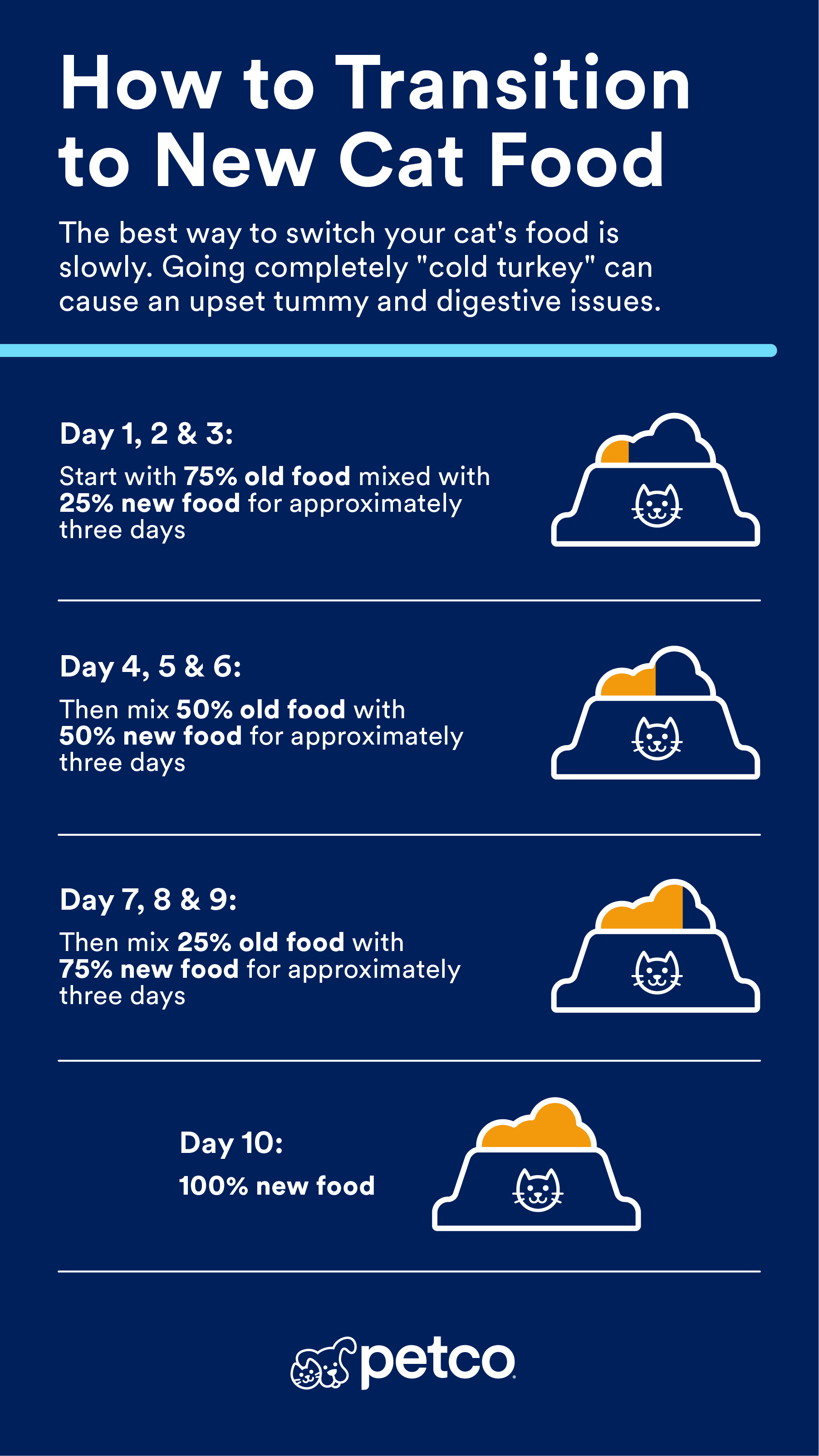
Changing a cat’s food requires care and patience. Sudden switches can upset their stomach and cause refusal to eat. A smooth transition helps your cat accept new flavors and nutrients without stress. Follow these tips to make the switch easier and safer.
Gradual Introduction
Start by mixing a small amount of new food with the current one. Increase the new food portion slowly over 7 to 10 days. This gentle approach helps your cat’s digestive system adjust. Serve the mix fresh and at the right temperature for better acceptance.
- Begin with 10% new food and 90% old food
- Increase new food by 10% every two days
- Watch for any refusal or digestive upset
- Keep feeding times consistent
Monitoring Reactions
Observe your cat’s behavior and digestion during the transition. Look for signs like vomiting, diarrhea, or loss of appetite. Also, watch for changes in energy or mood. If problems arise, slow the transition or consult a vet. Good monitoring ensures your cat stays healthy and happy.
Frequently Asked Questions
How Much Food Does An Adult Cat Need Daily?
Adult cats typically need 20 to 30 calories per pound daily. This varies by activity, age, and health. On average, feed 1/3 to 1/2 cup of dry food or 5 to 6 ounces of wet food per day.
Does Cat Size Affect Daily Food Amount?
Yes, larger cats need more calories daily. Small or less active cats require less food. Adjust portions based on your cat’s weight and lifestyle to maintain a healthy body condition.
How Often Should I Feed My Adult Cat?
Most adult cats do well with two meals daily. Feeding twice helps regulate metabolism and prevents overeating. Some cats prefer free feeding, but controlled portions are best for weight management.
Can Activity Level Change My Cat’s Food Needs?
Highly active cats burn more calories and need extra food. Sedentary cats require fewer calories to avoid weight gain. Monitor your cat’s activity to adjust daily food portions accordingly.
Conclusion
Feeding your adult cat the right amount is key to good health. Cats need balanced portions based on weight, age, and activity. Overfeeding can cause weight gain and health problems. Underfeeding may lead to weakness and nutrient gaps. Watch your cat’s behavior and body condition closely.
Adjust food amounts as needed for a happy, healthy pet. Consistent feeding routines help cats feel secure and cared for. Proper daily food helps your cat live a long, active life. Keep your cat’s needs in mind every day.



Leave a Reply